Memory
ShopOS · Brand Memory · Product Design + Design Engineering · Oct 2025 to Present
Teaching AI to remember a brand, so no one explains it twice
A persistent memory that holds a brand’s look, voice, rules, and the decisions that actually worked, so every generation comes out on-brand without re-briefing the model.
One memory the whole system reads from, instead of a brief retyped on every prompt.
TL;DR
- Challenge
- Generative AI could make a striking shot, never a branded one. With no memory of the brand, every prompt respelled the whole thing: palette, voice, rules, again and again.
- Approach
- Stop briefing the model per prompt. Build it a memory that holds everything true about the brand and learns from every decision the brand makes.
- Solution
- Brand Memory: paste a link and it extracts the brand’s DNA, layer a moodboard for the moment, feed it approvals, edits, and rejections so it learns what works, and let every agent read from one shared memory.
- Impact
- Live in production, onboarding real brands.
My role
I owned the problem framing (reframing generation into memory), the information architecture of the memory, the memory-and-agent interaction models, and the memory-exploration UX, and I built the React front-end. I designed the system and shipped it. The backend memory engine was built by engineering.
- Team
- Tools
The problem
Every generation meant re-briefing the brand from scratch.
Generative AI could produce a striking shot, but never a branded one.
With no memory of the brand, every prompt had to spell out the whole thing: the palette, the voice, the rules. It took several tedious attempts before a generation lined up with the guidelines. The model had no idea who the brand was, so the designer became its memory, on every single prompt.
Without memory

With memory

The reframe
This wasn’t a generation problem. It was a memory problem.
Most AI products ask how to generate better. I asked how to remember.
Give the model a memory and one line is enough. But the deeper insight came later: a brand’s memory isn’t its style guide, it’s the accumulated record of its decisions, which image worked, which word got killed, and why.
Consumer platforms compound behavioral traces: clicks, watches, scrolls. Brands compound decision traces. Build a memory that captures those and you stop generating merely on-brand and start generating what works.
Ideation
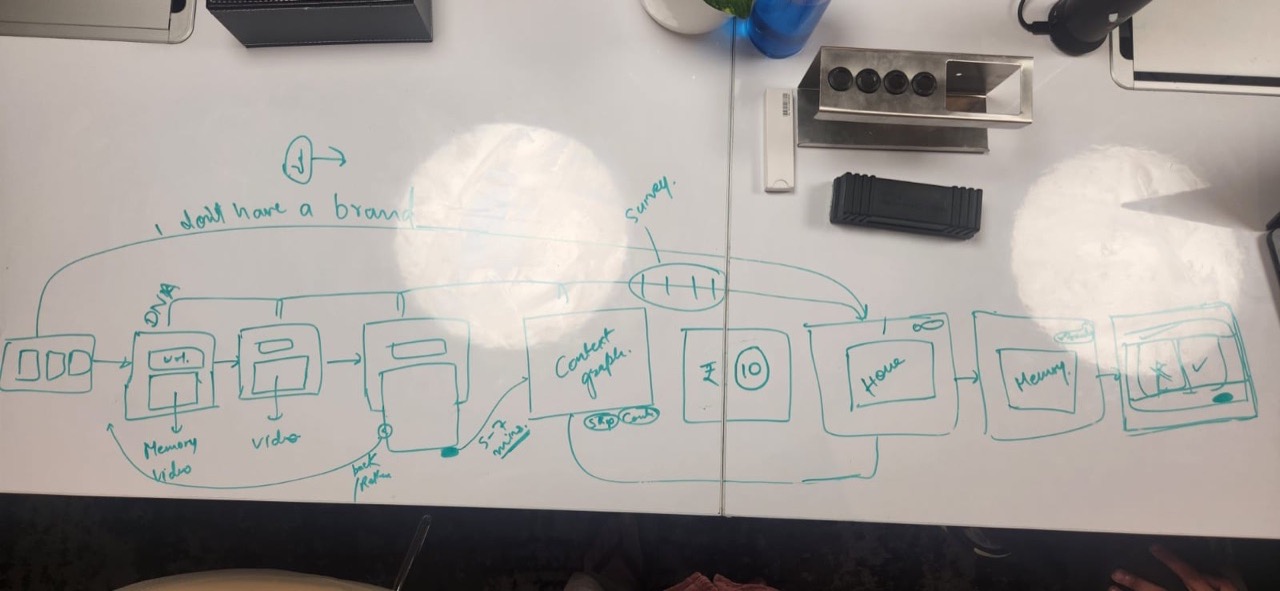
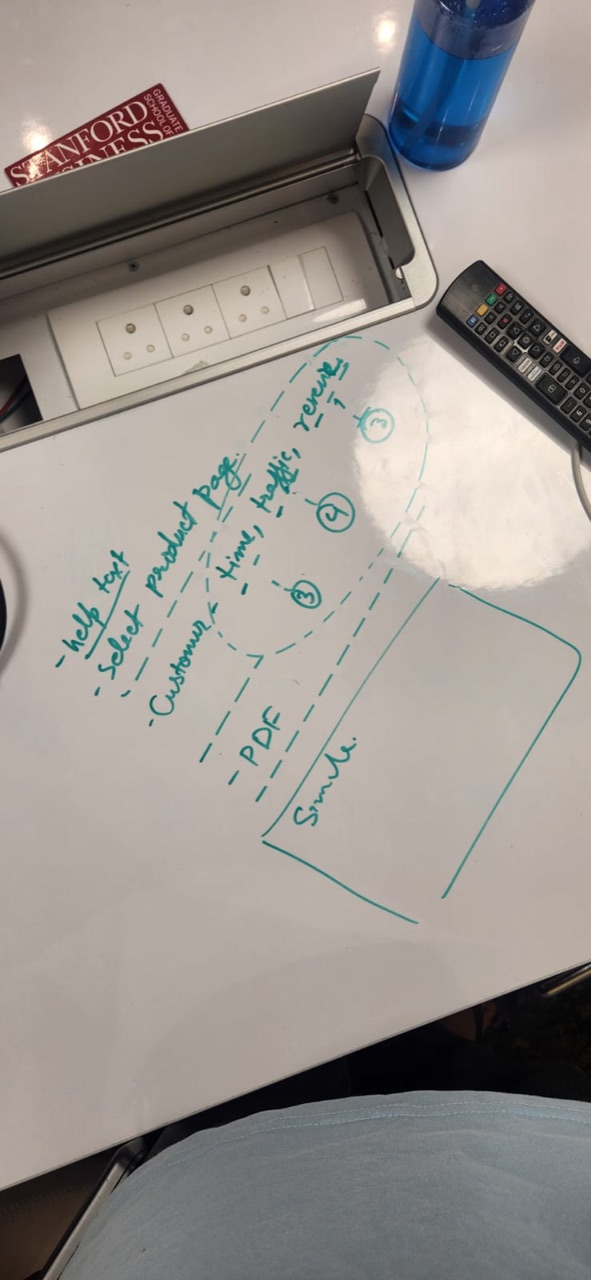
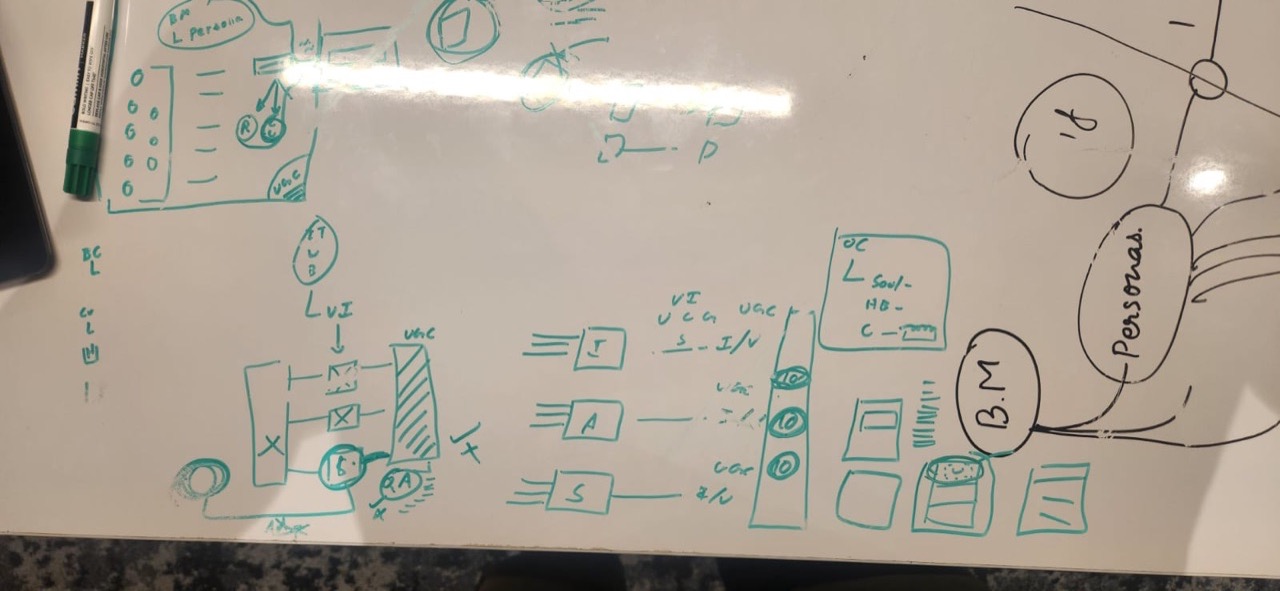
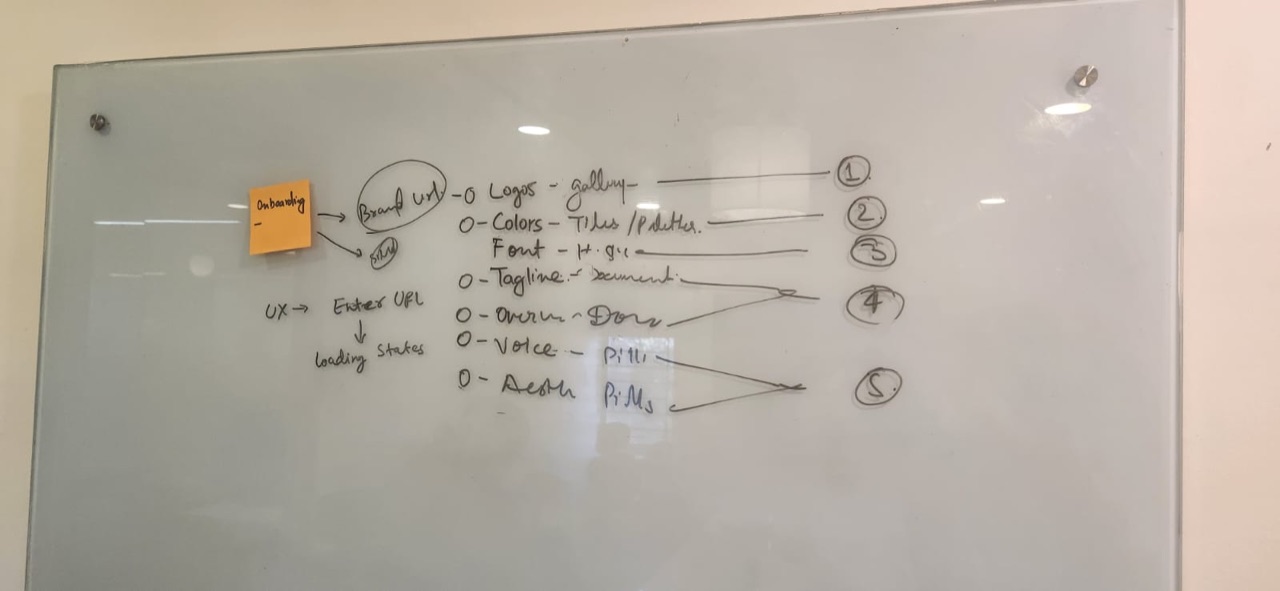
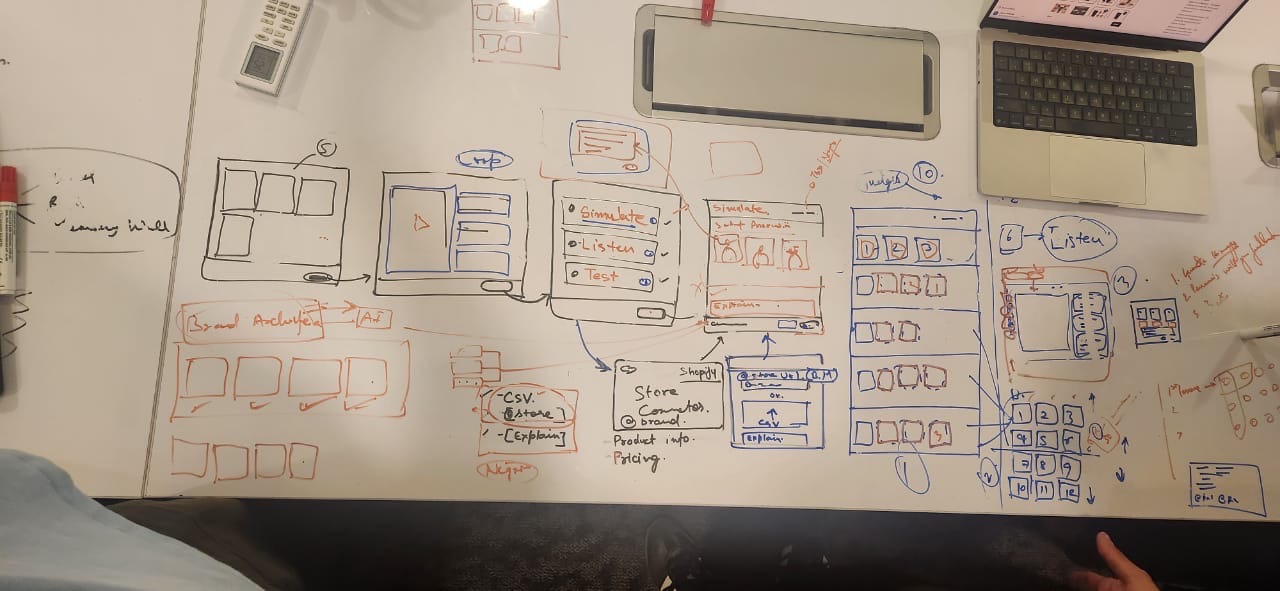
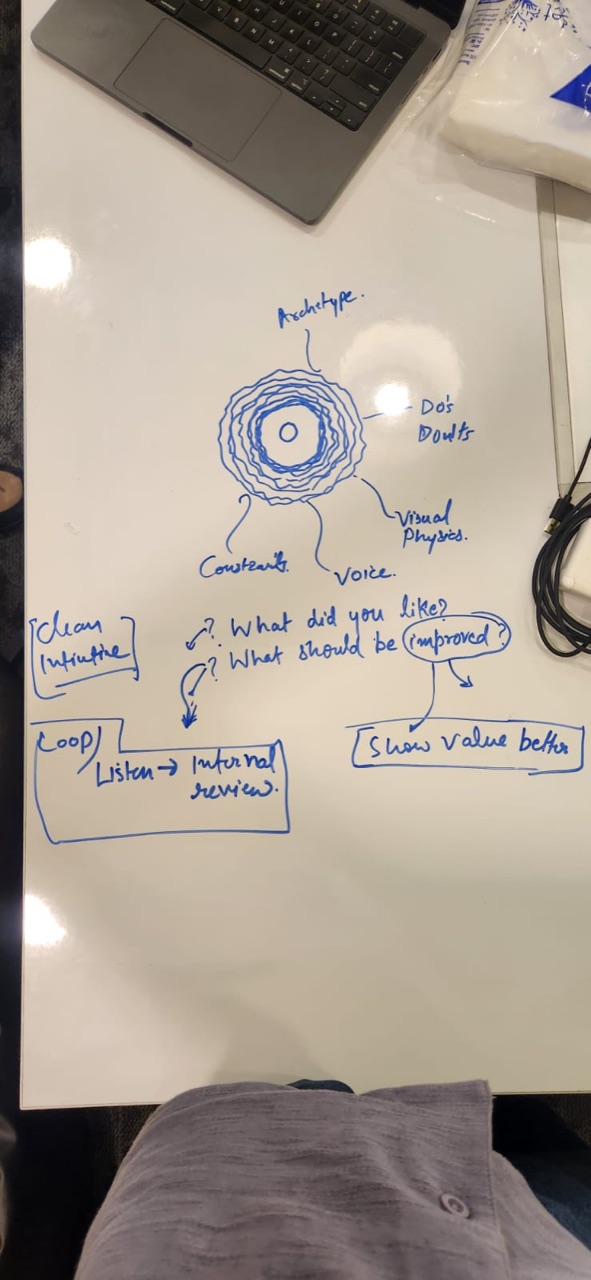
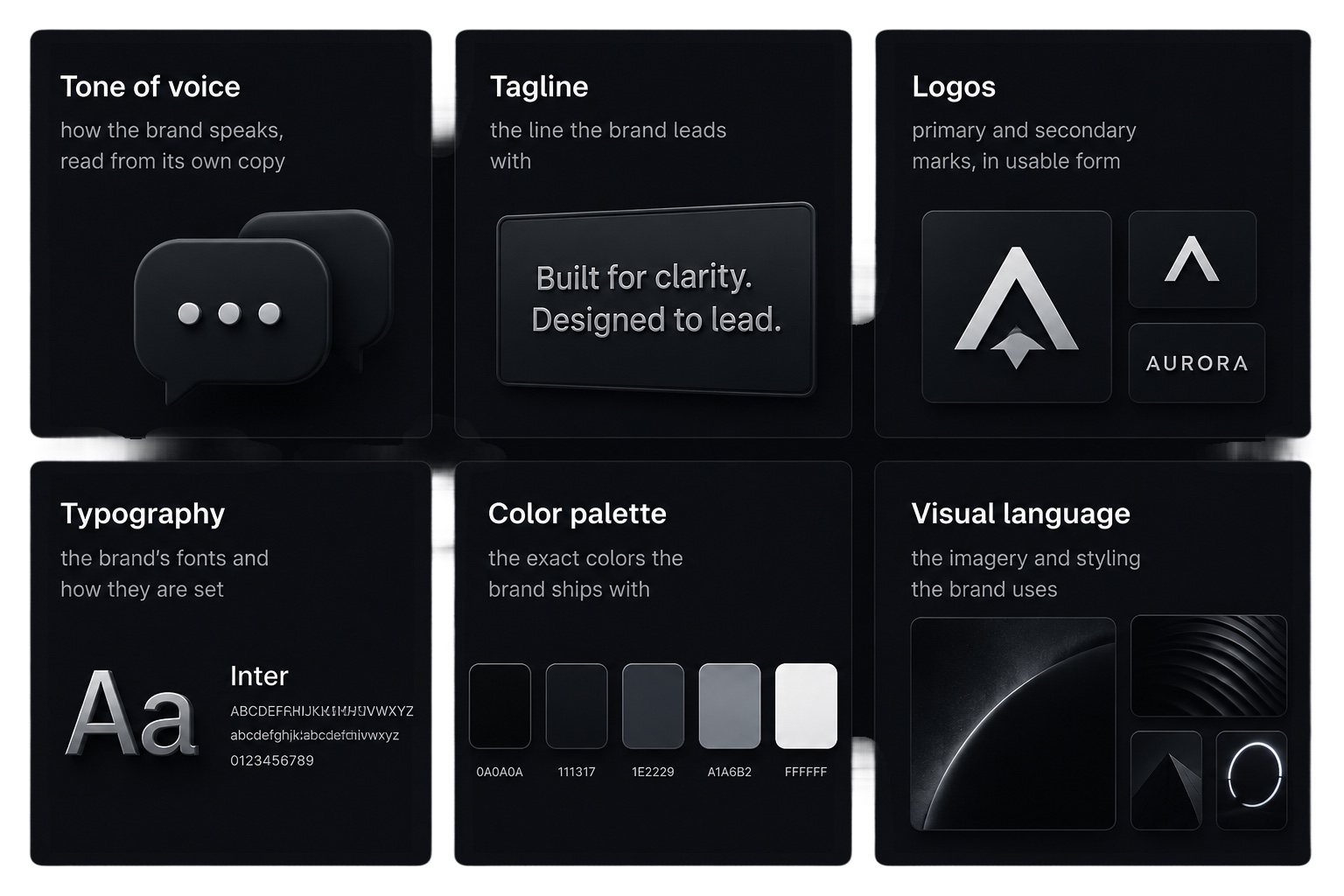
First, the memory lived on a whiteboard.
What does a brand actually remember, and how would a model read it back?
I kept drawing the same idea five ways and crossing four of them out. The markers didn’t survive the week. The thinking did. The arrows still standing when the caps ran dry became Phase 01.
Phase 01
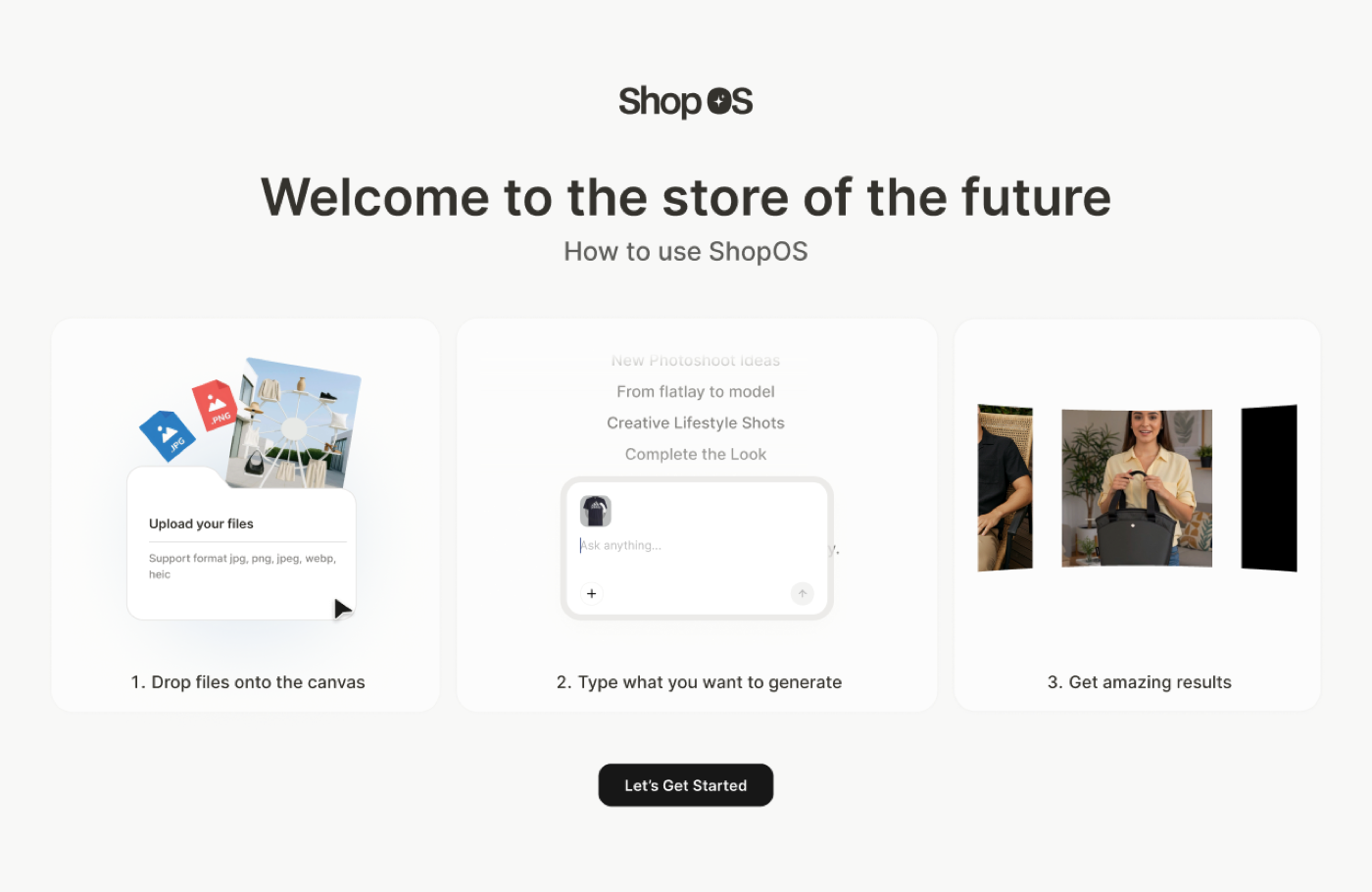
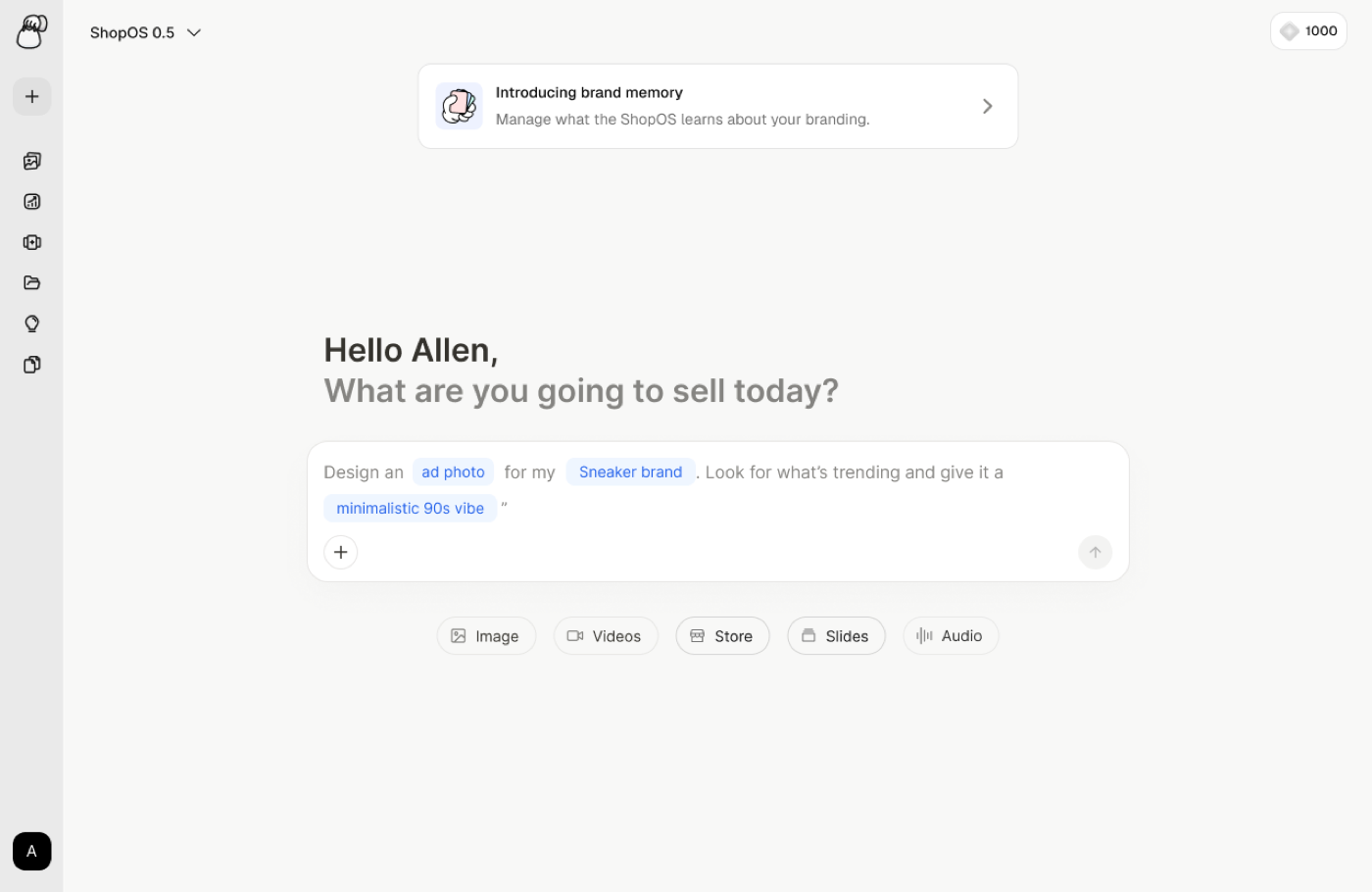
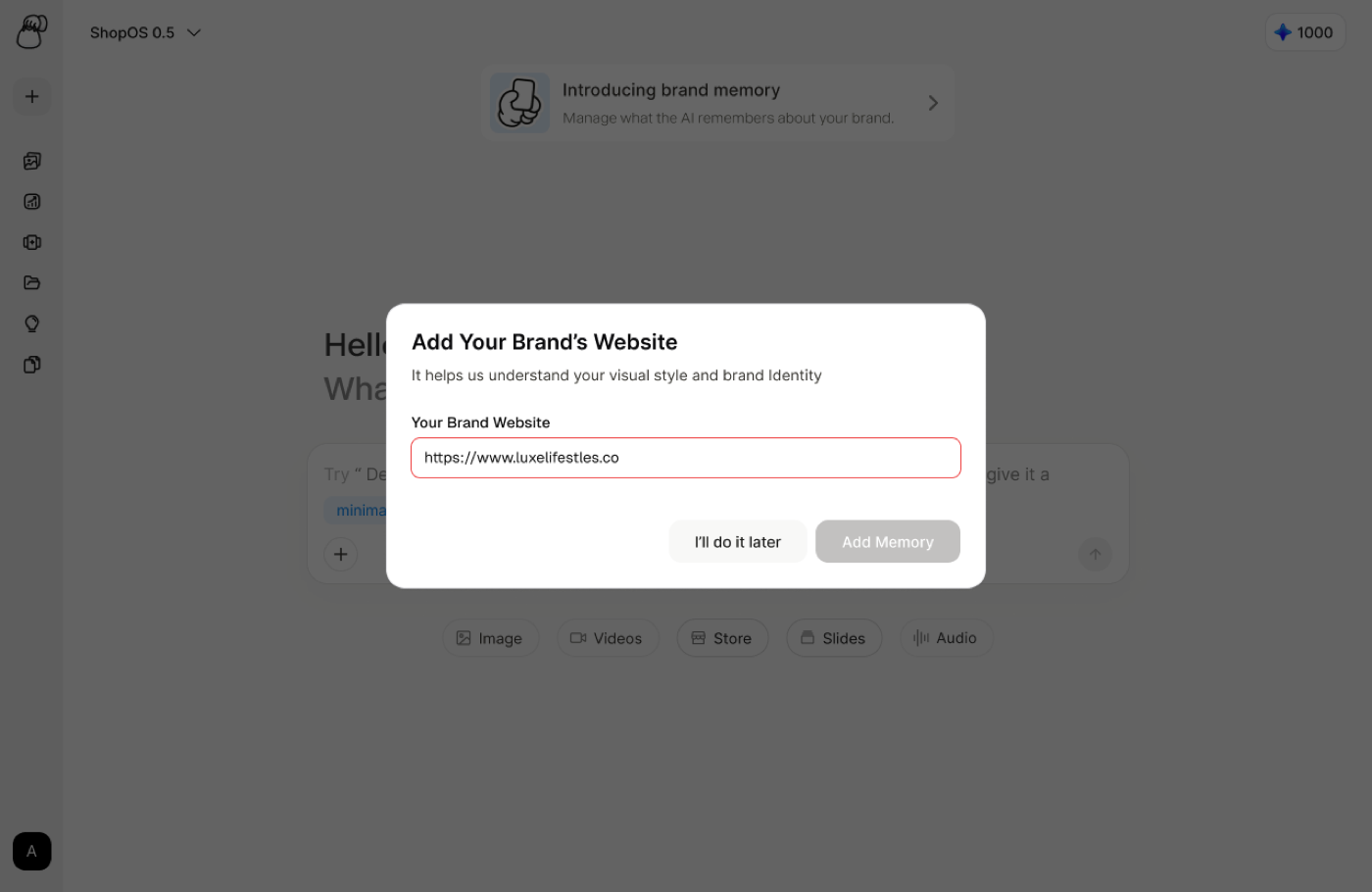
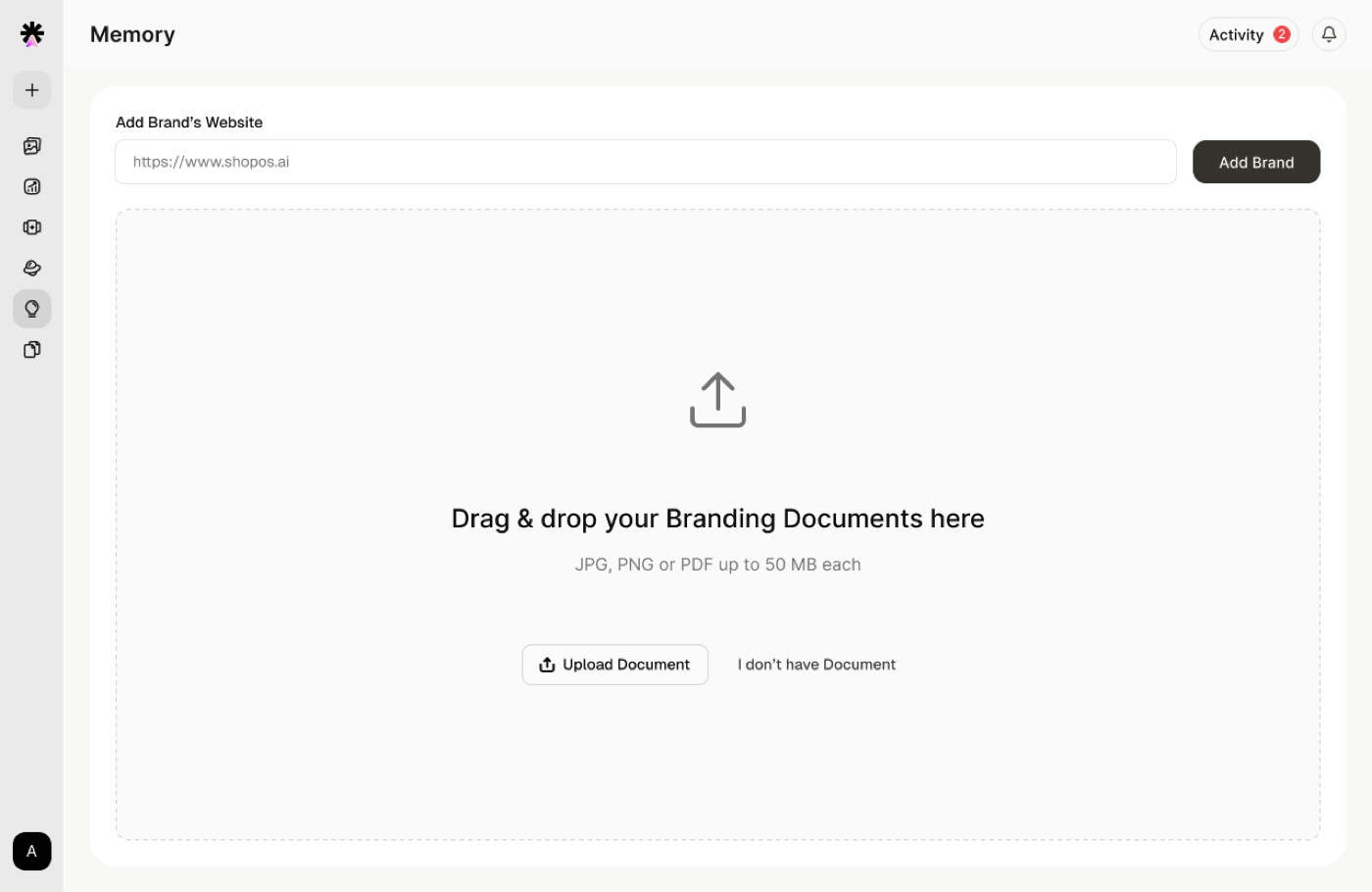
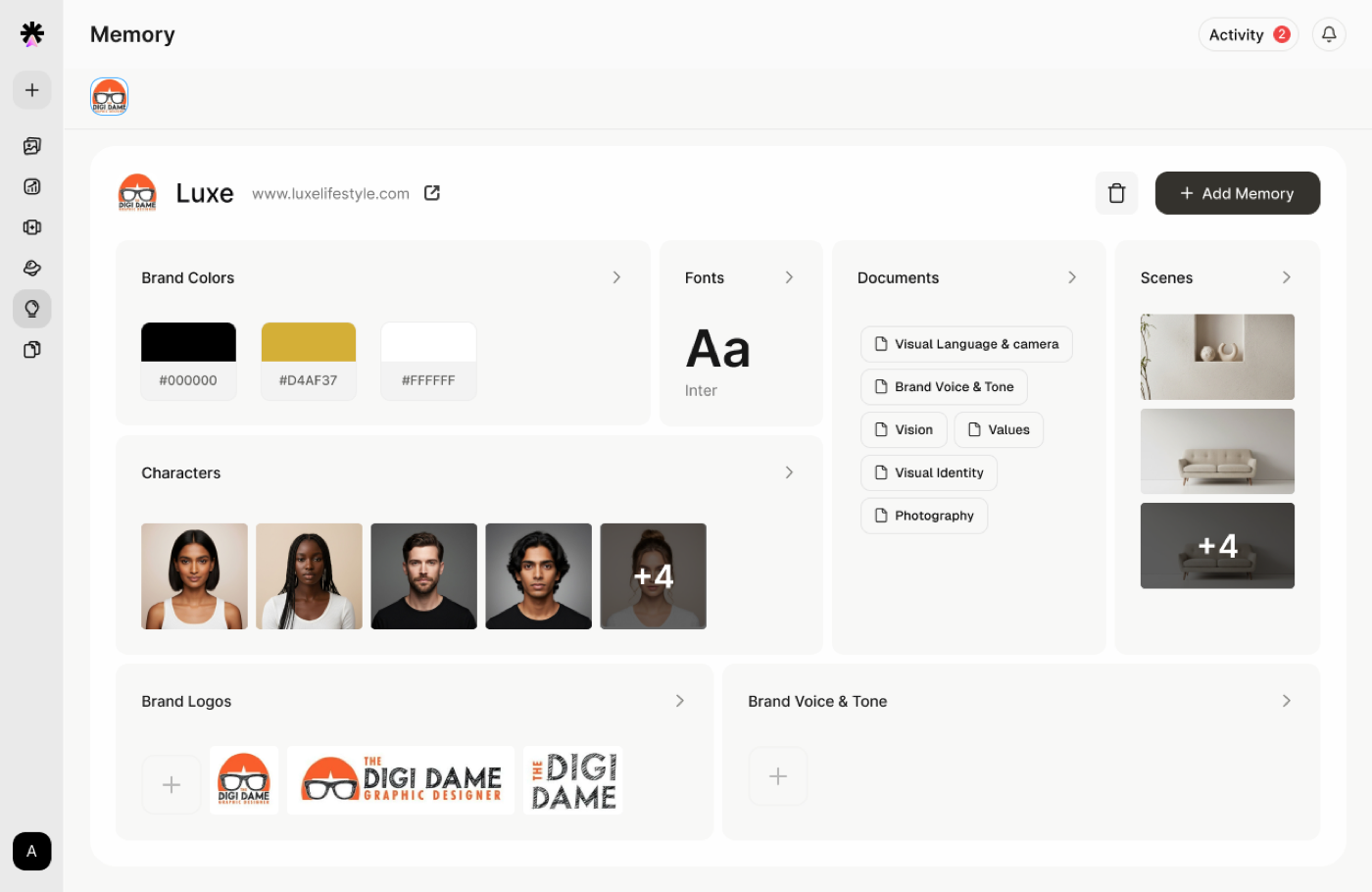
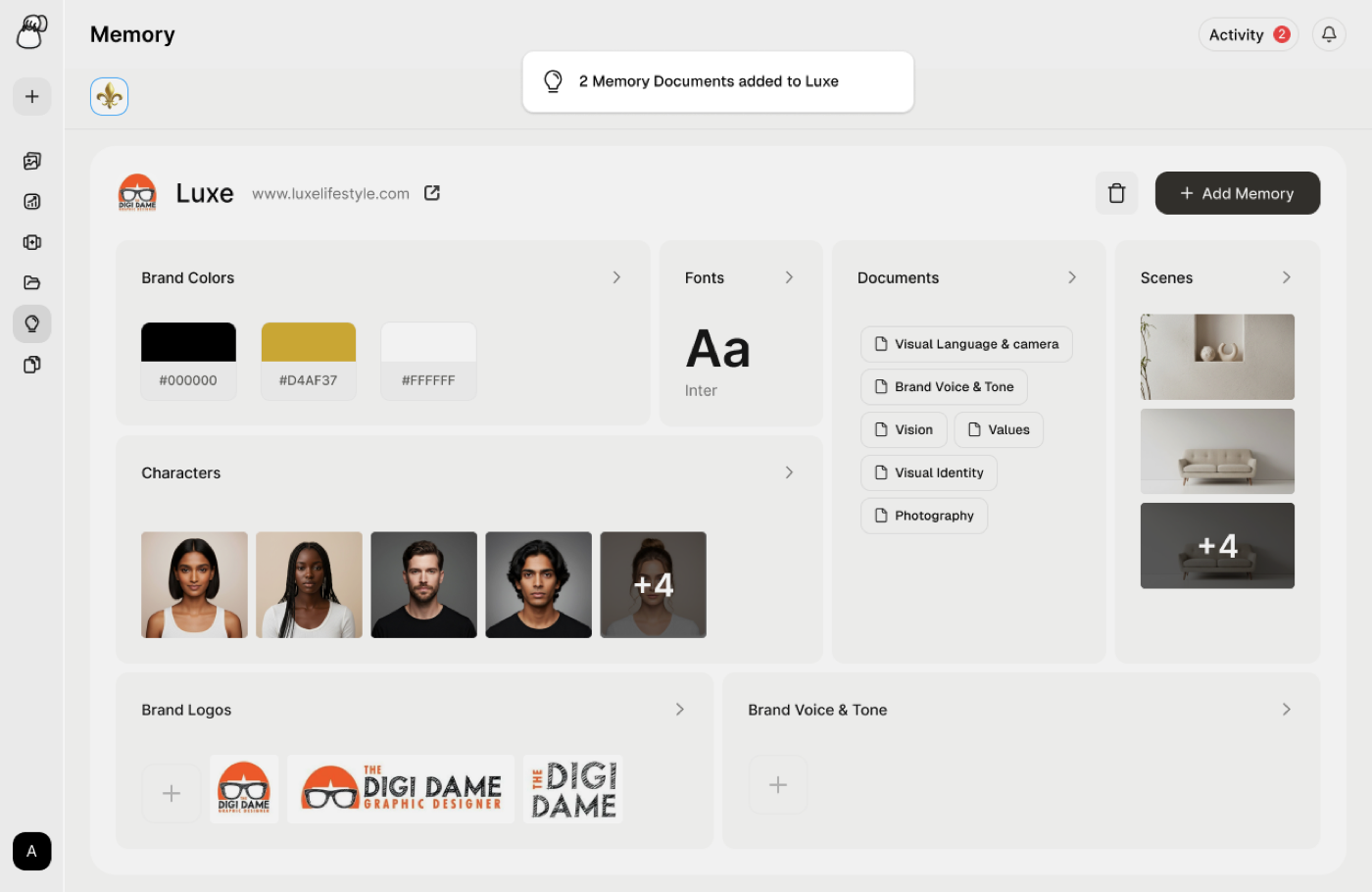
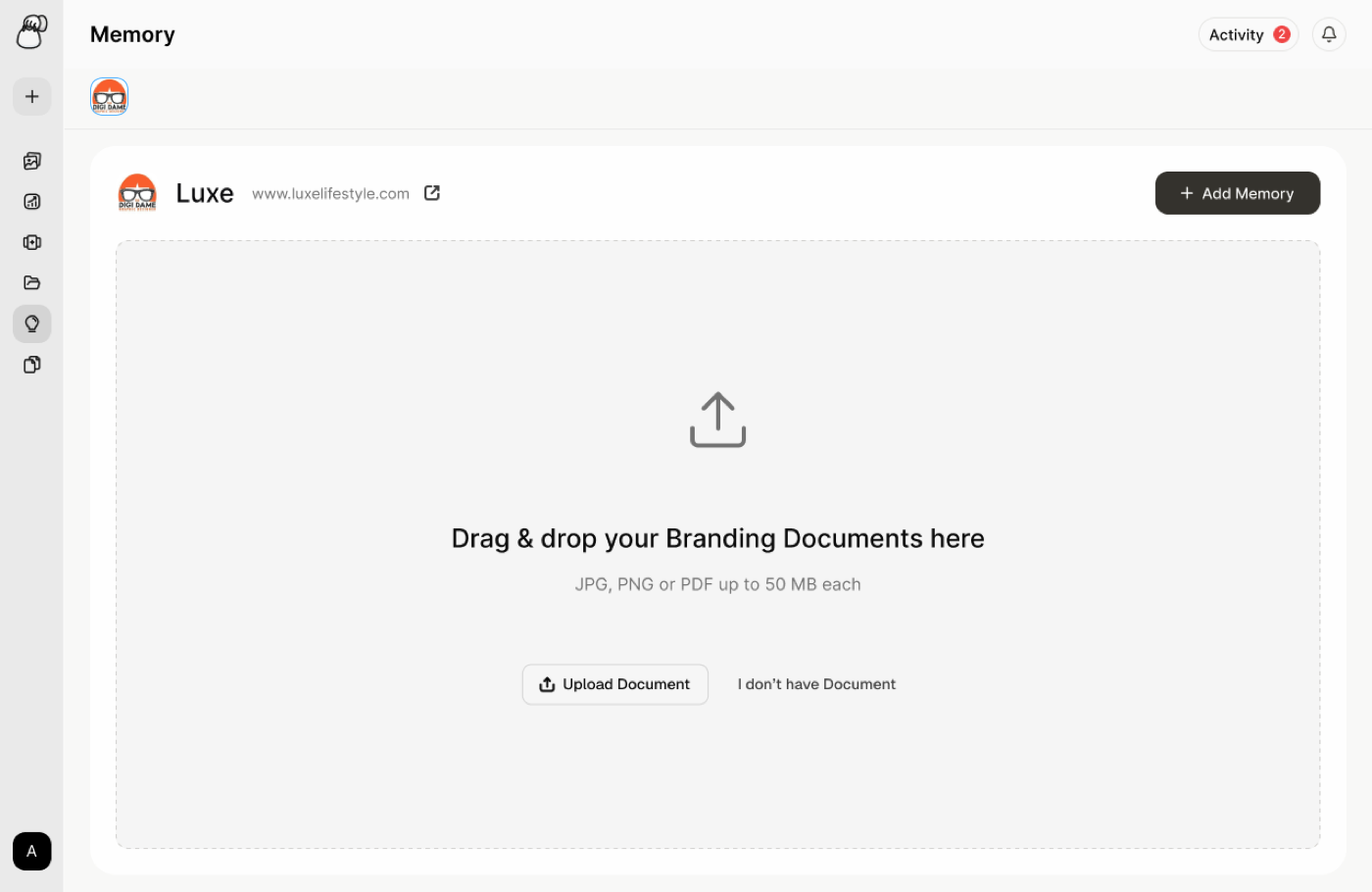
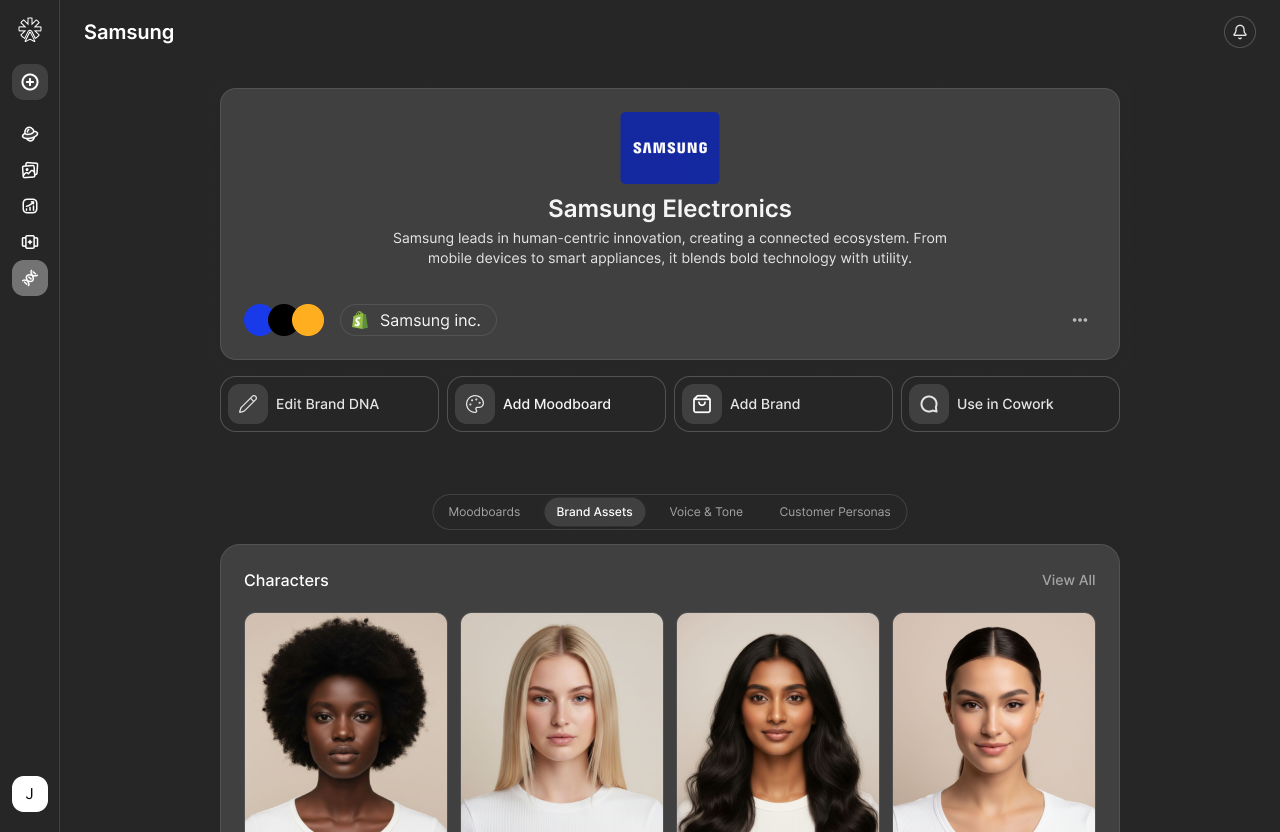
Paste a link, it learns the whole brand.
A brand already lives on its website, so I let it read from there.
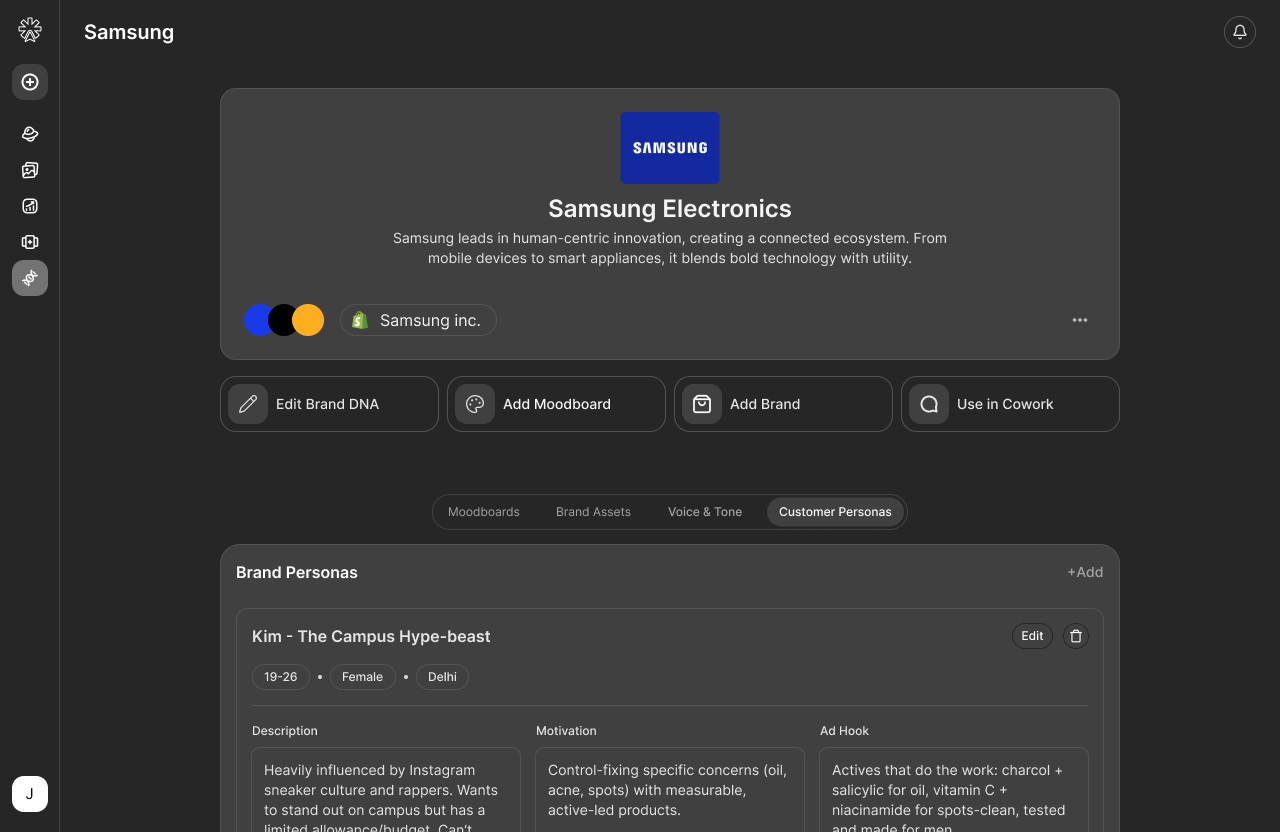
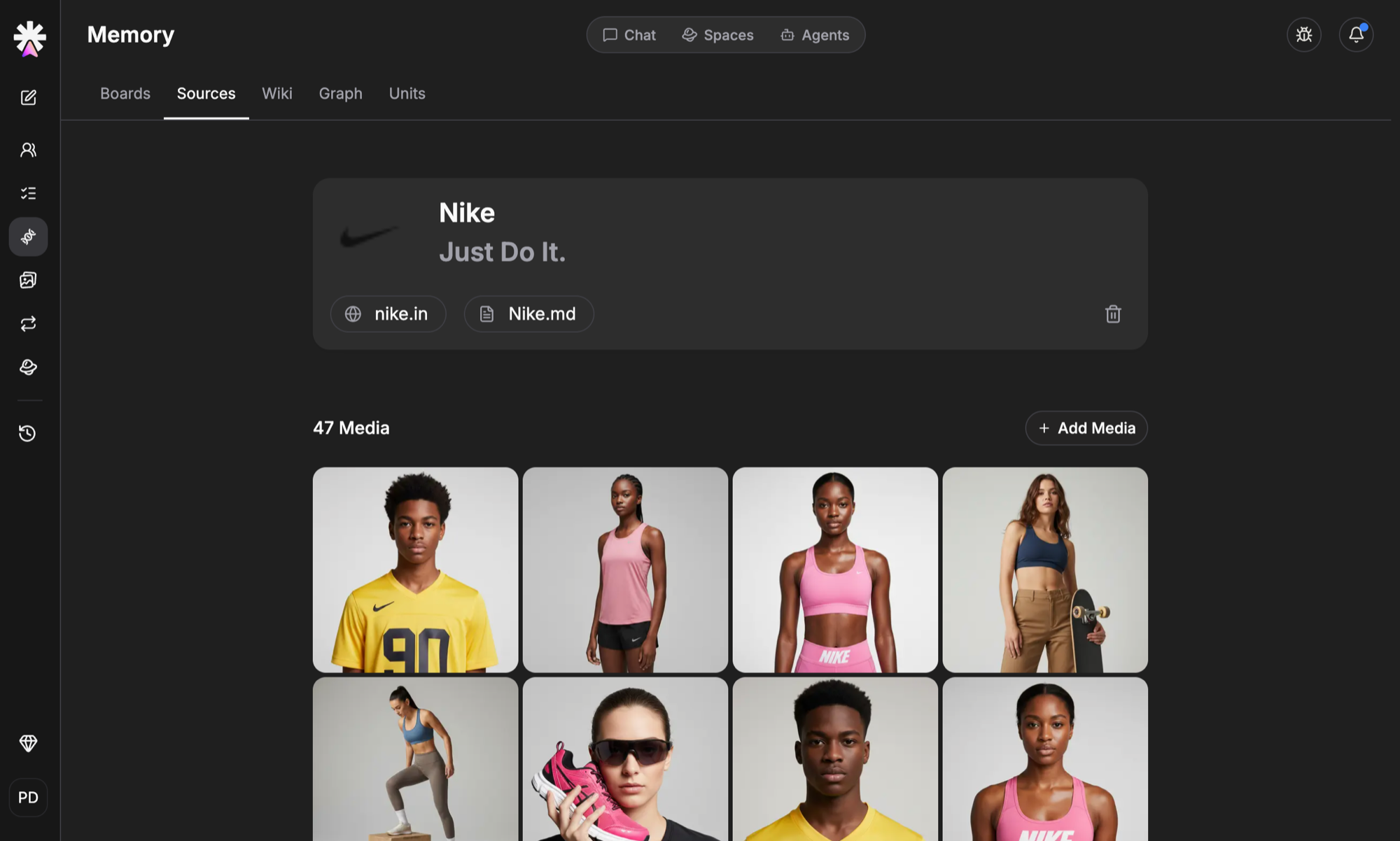
- Paste one URL; it studies the site the way a sharp new designer would
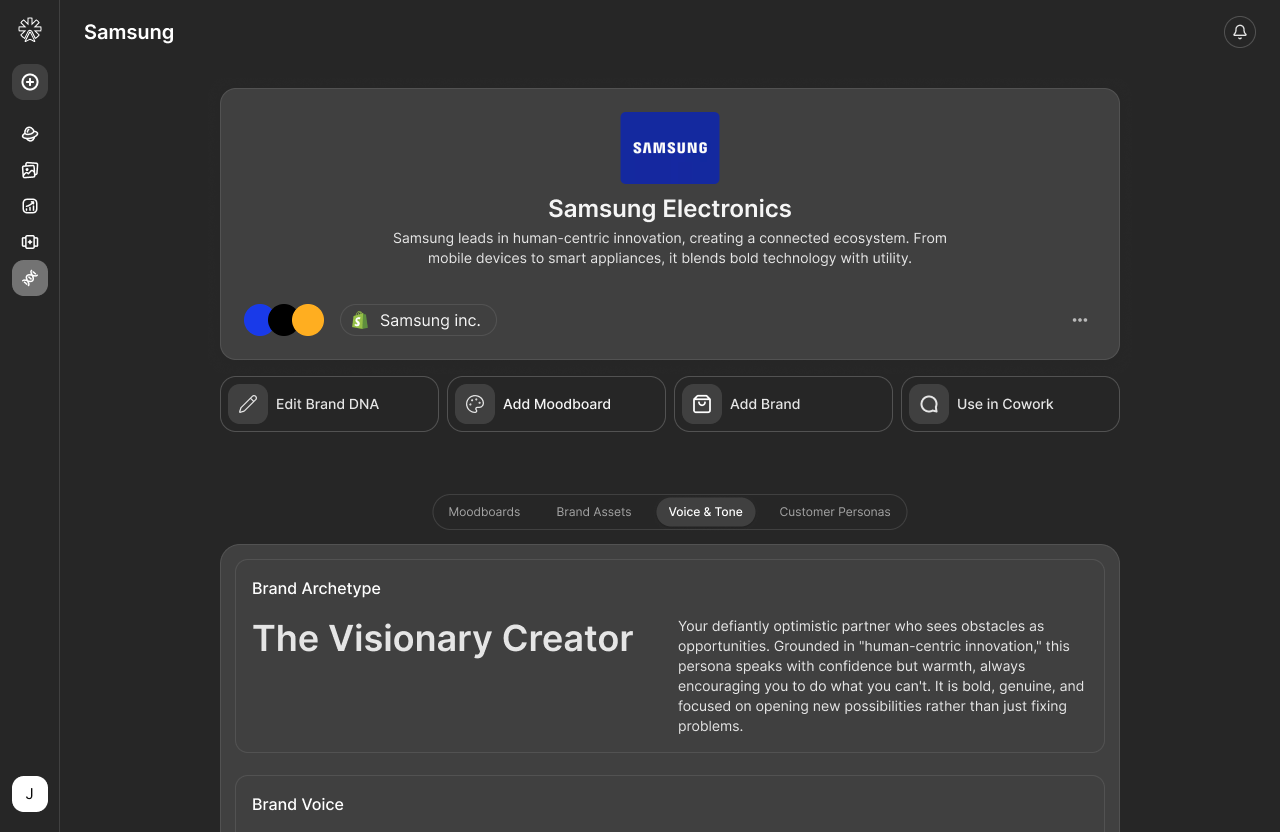
- Picks up the look, the voice, and the rules, with nothing briefed by hand
- Everything a model needs to build for the brand, captured automatically from one link
Phase 02
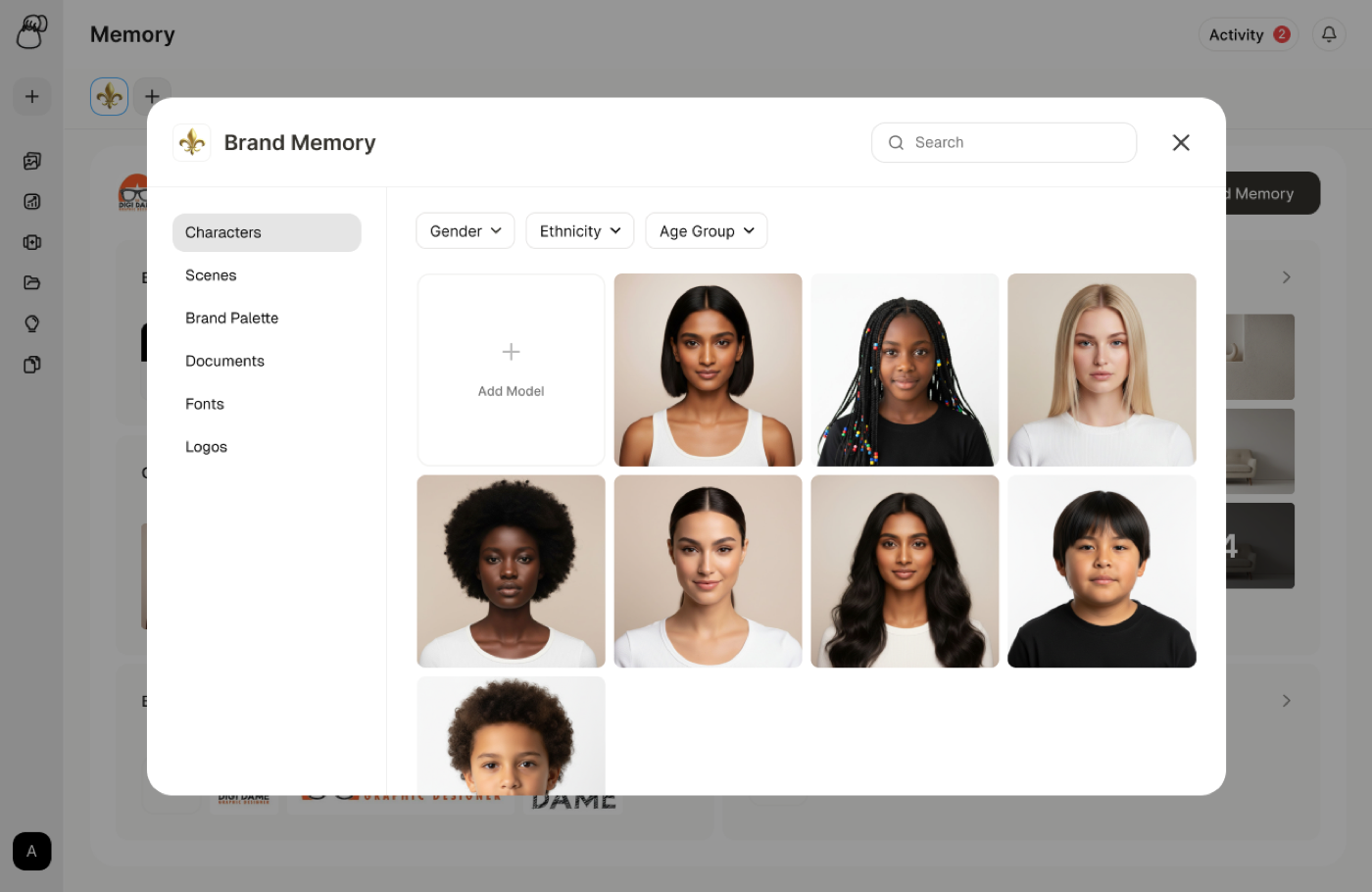
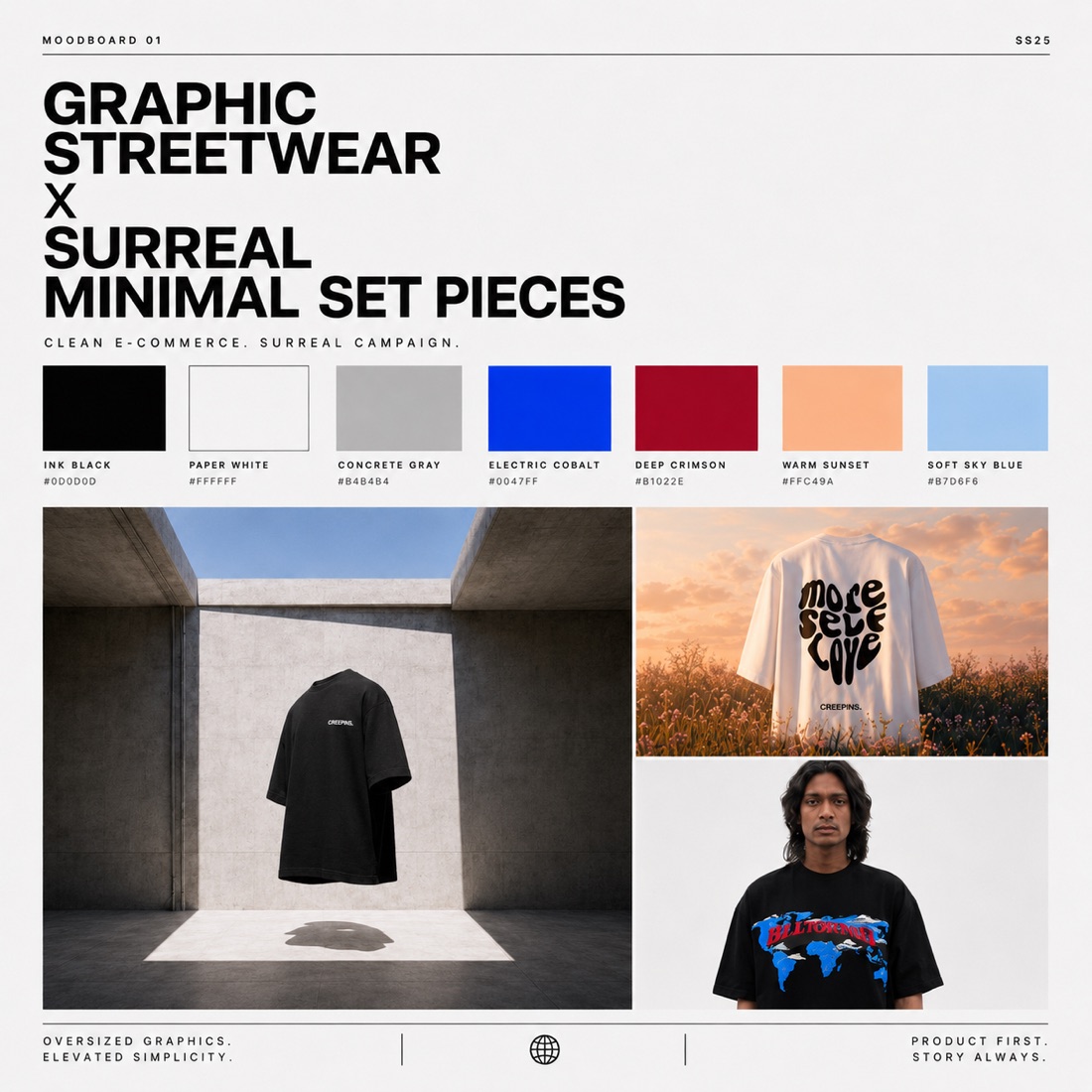
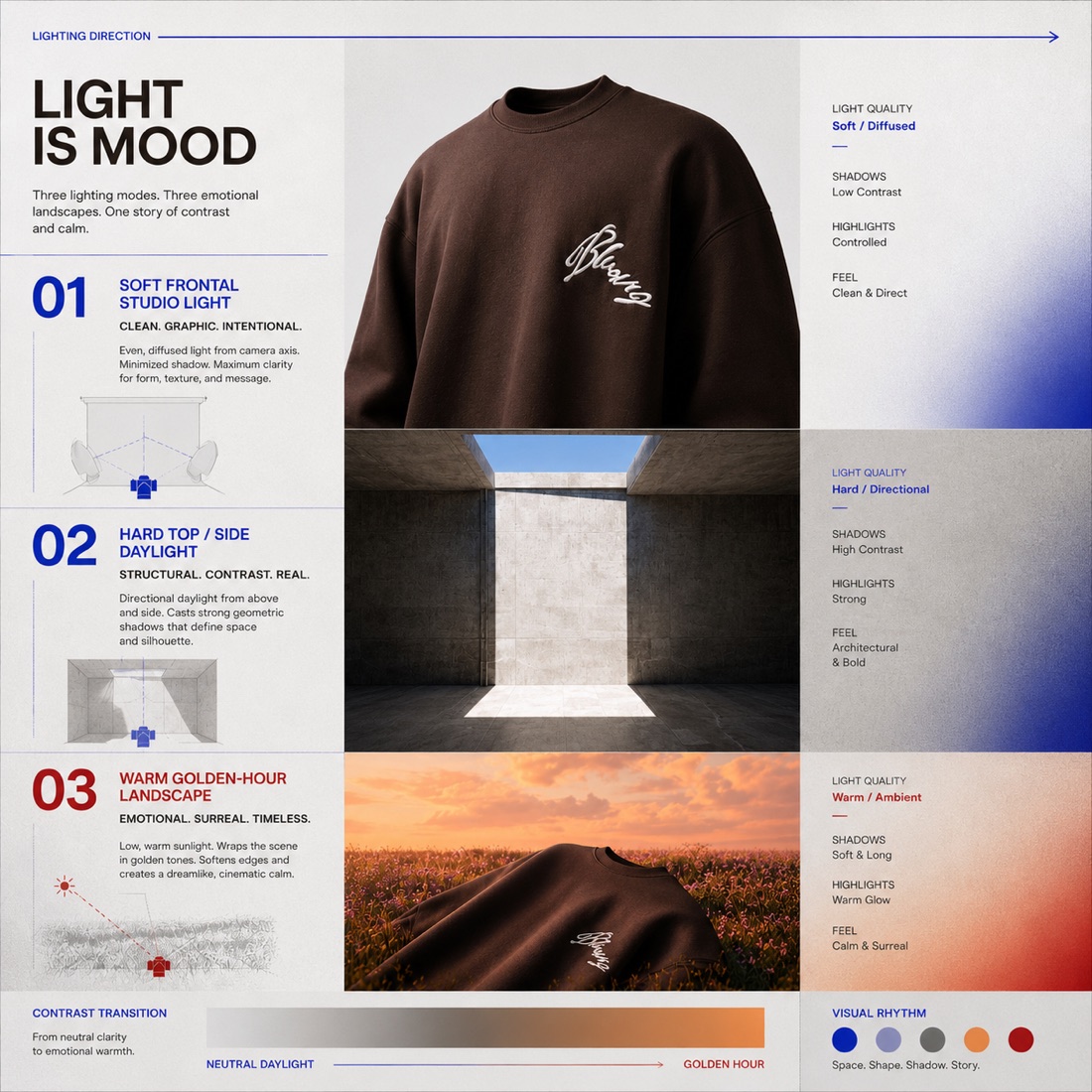
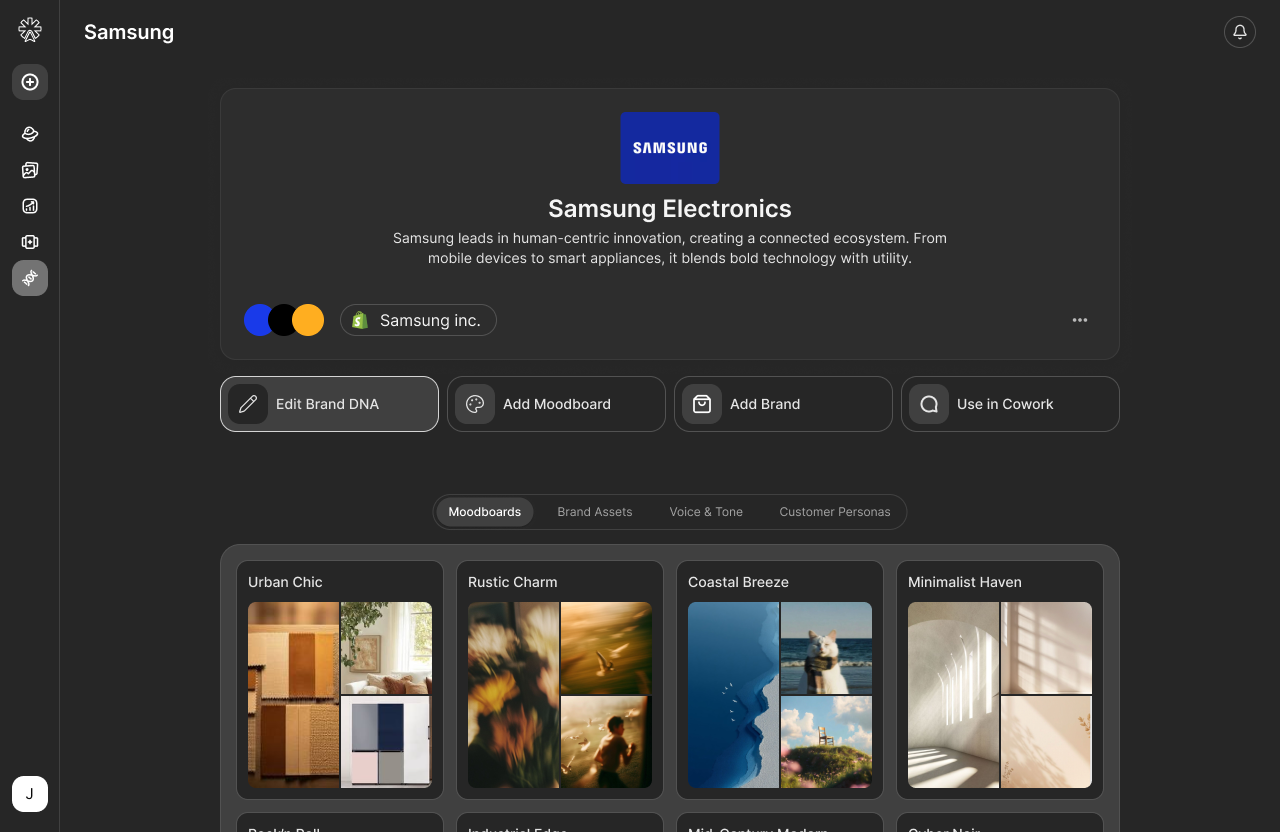
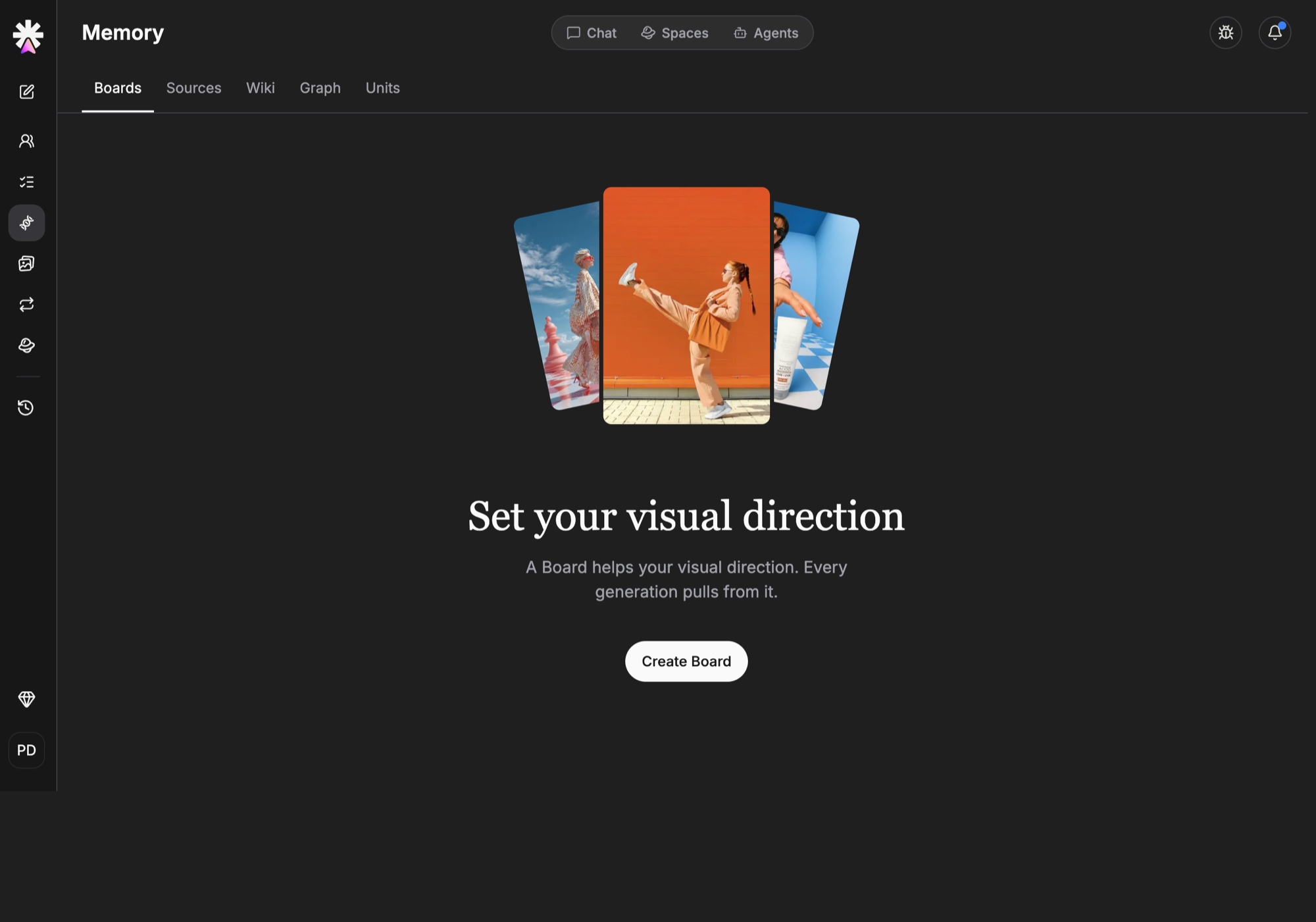
A moodboard, for who the brand wants to be this season.
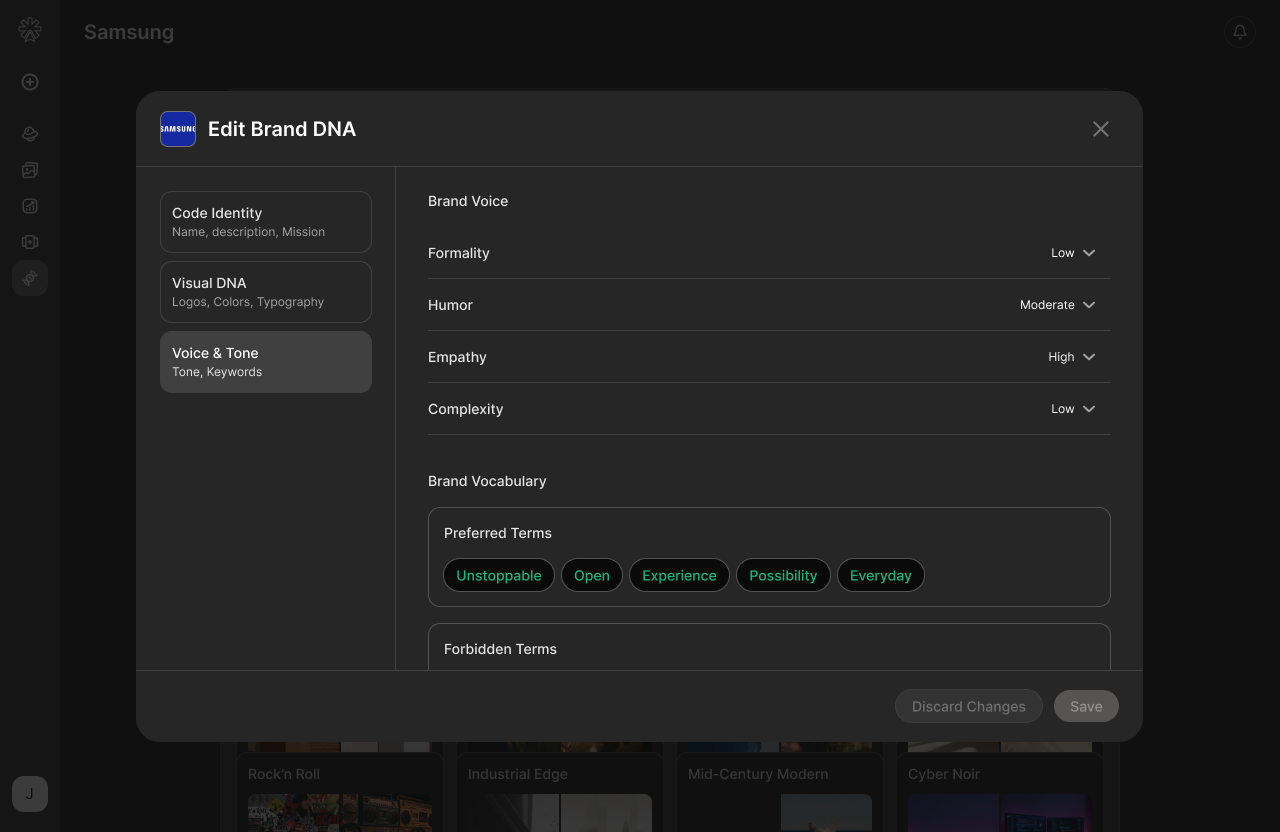
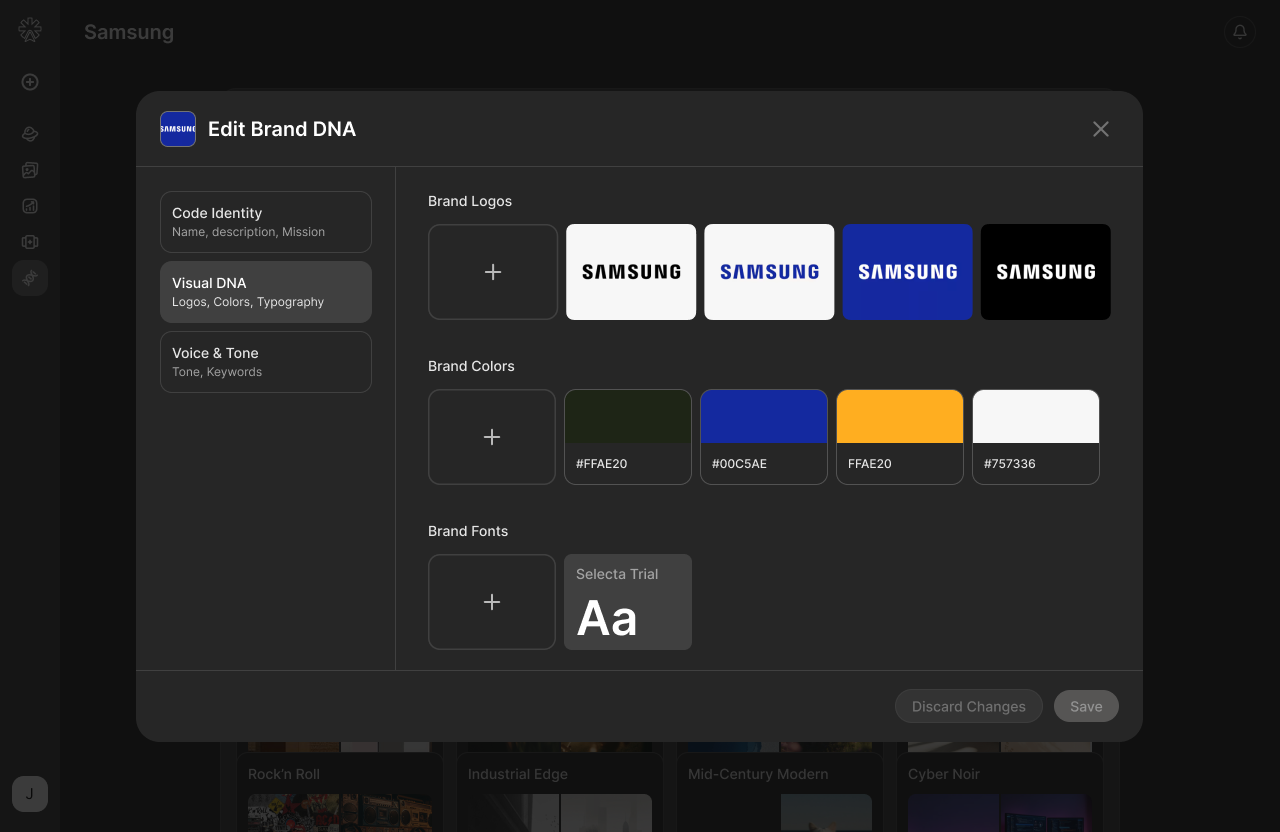
Brand DNA holds what a brand always is. A moodboard holds who it wants to be this campaign.
- Brand DNA is the long-term memory, always on
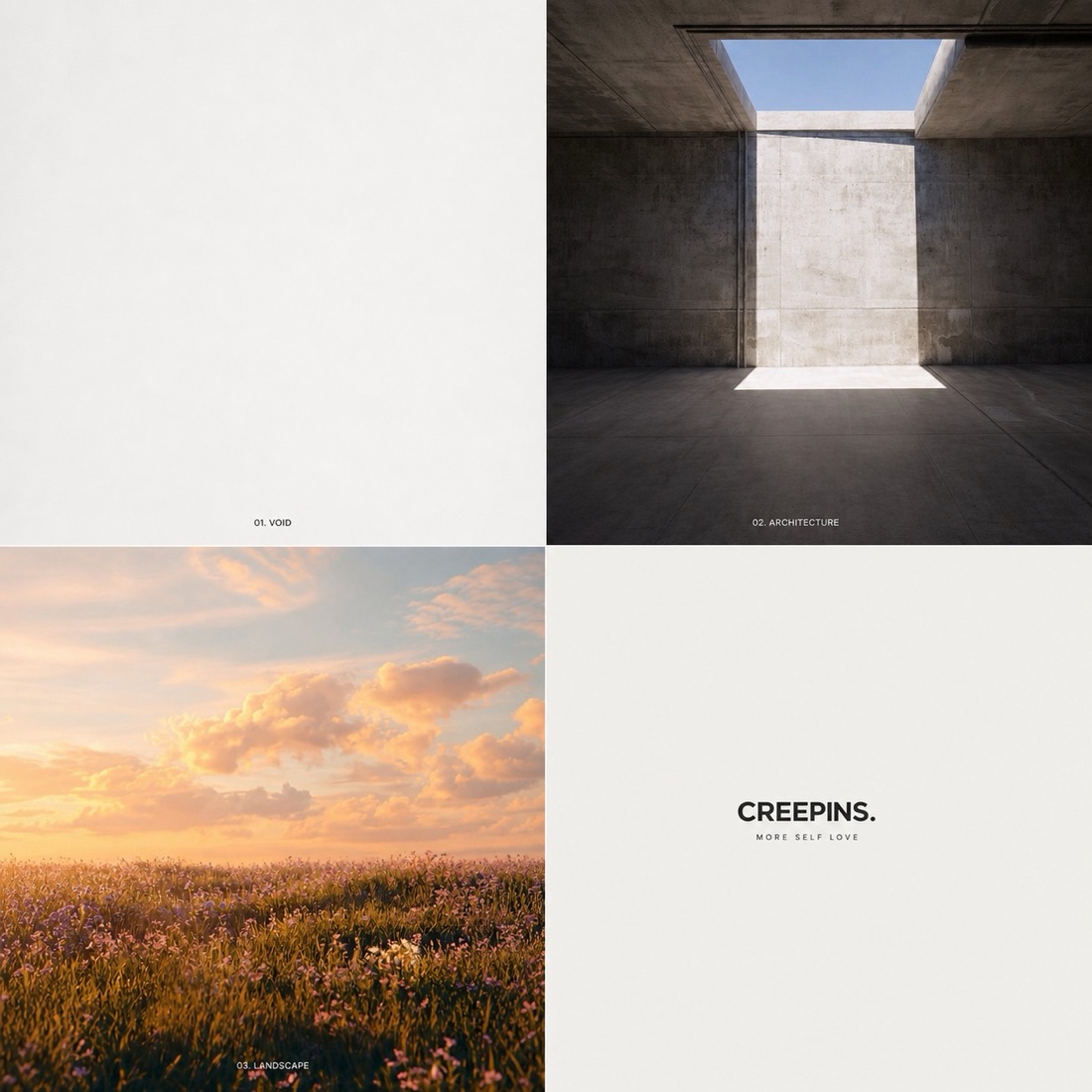
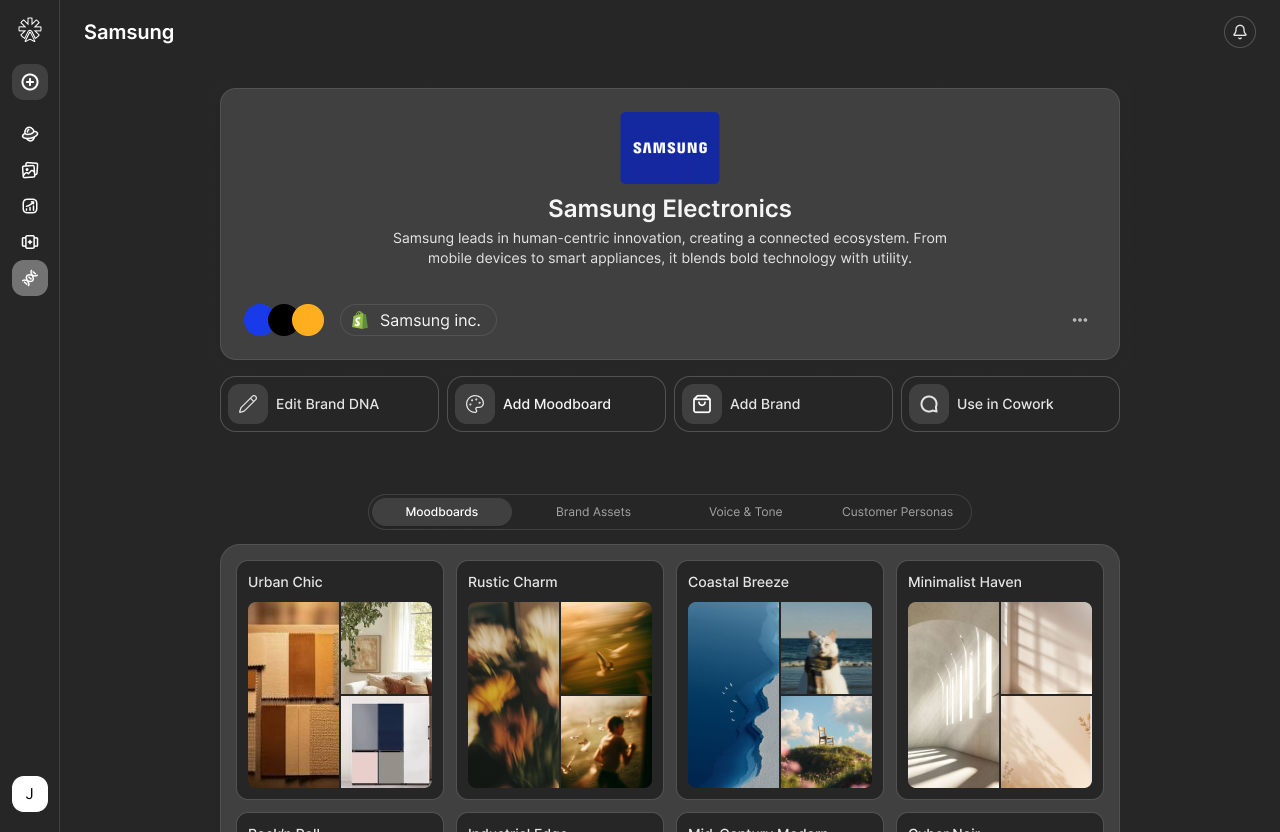
- A moodboard is a child memory: a focused layer a brand assembles for a launch or a drop
- The system reads it on top of the DNA, so the generation comes out specific to the moment, not just on-brand
A redesign rode along: v1 worked, but this version made a brand team want to live in it. I rebuilt it darker and calmer, added moodboards as a flexible child memory, and cleared the navigation out of the way.

Phase 03
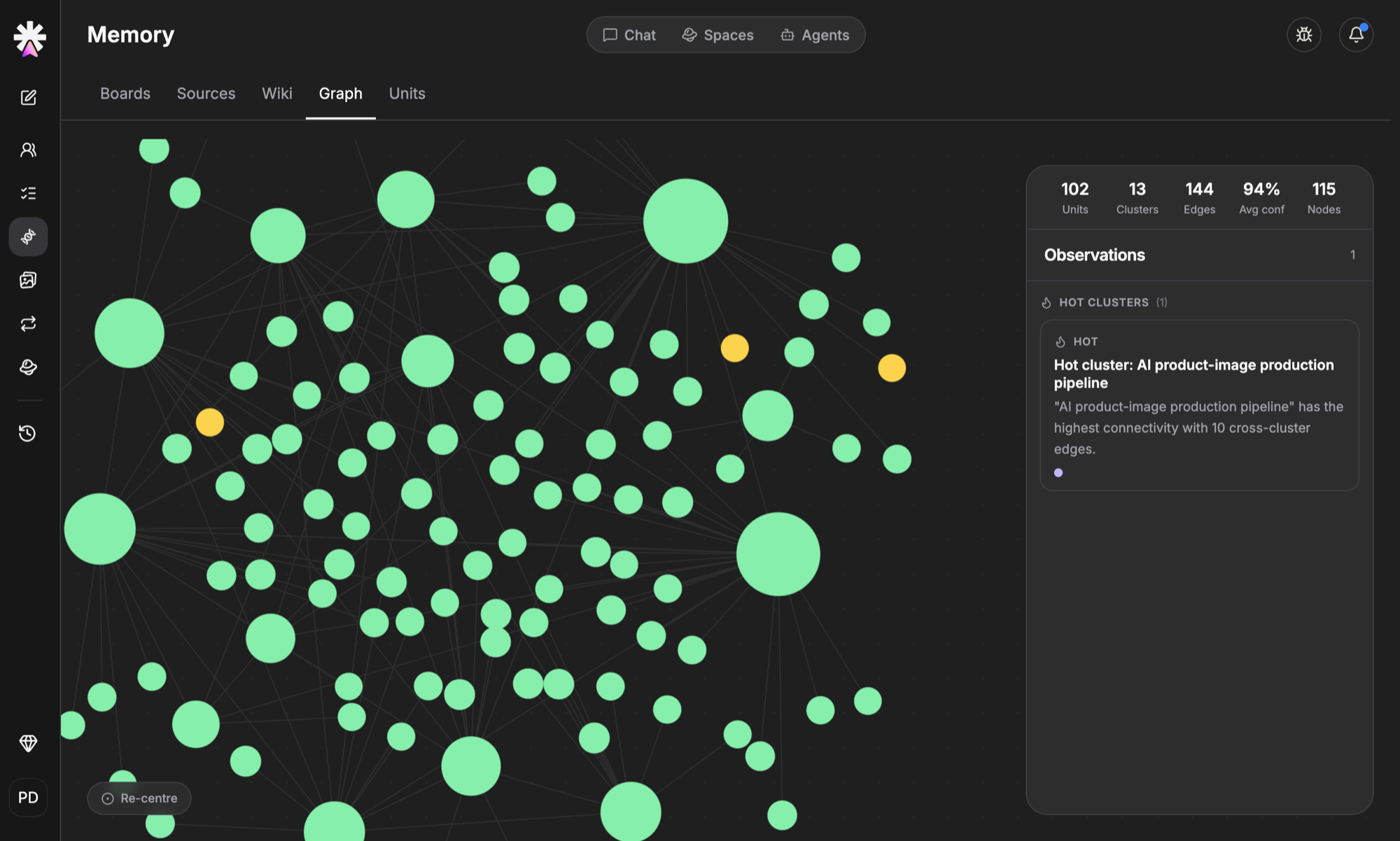
Memory that learns what works.
Then I stopped treating memory as a fixed profile.
Rejected
A static brand profile, set once at onboarding. Accurate on day one, stale by the next campaign, blind to whether anything it guided actually worked.
Chosen
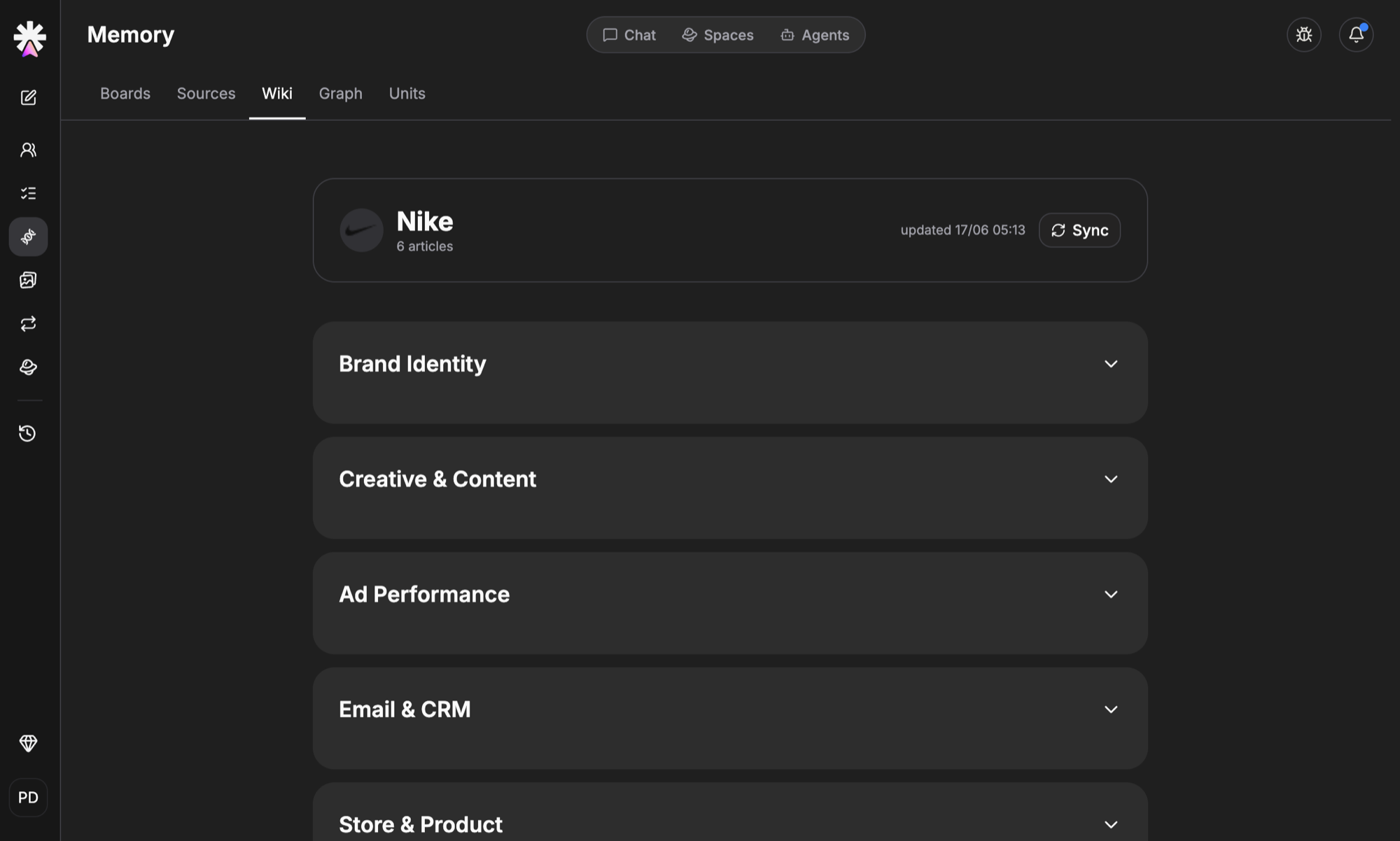
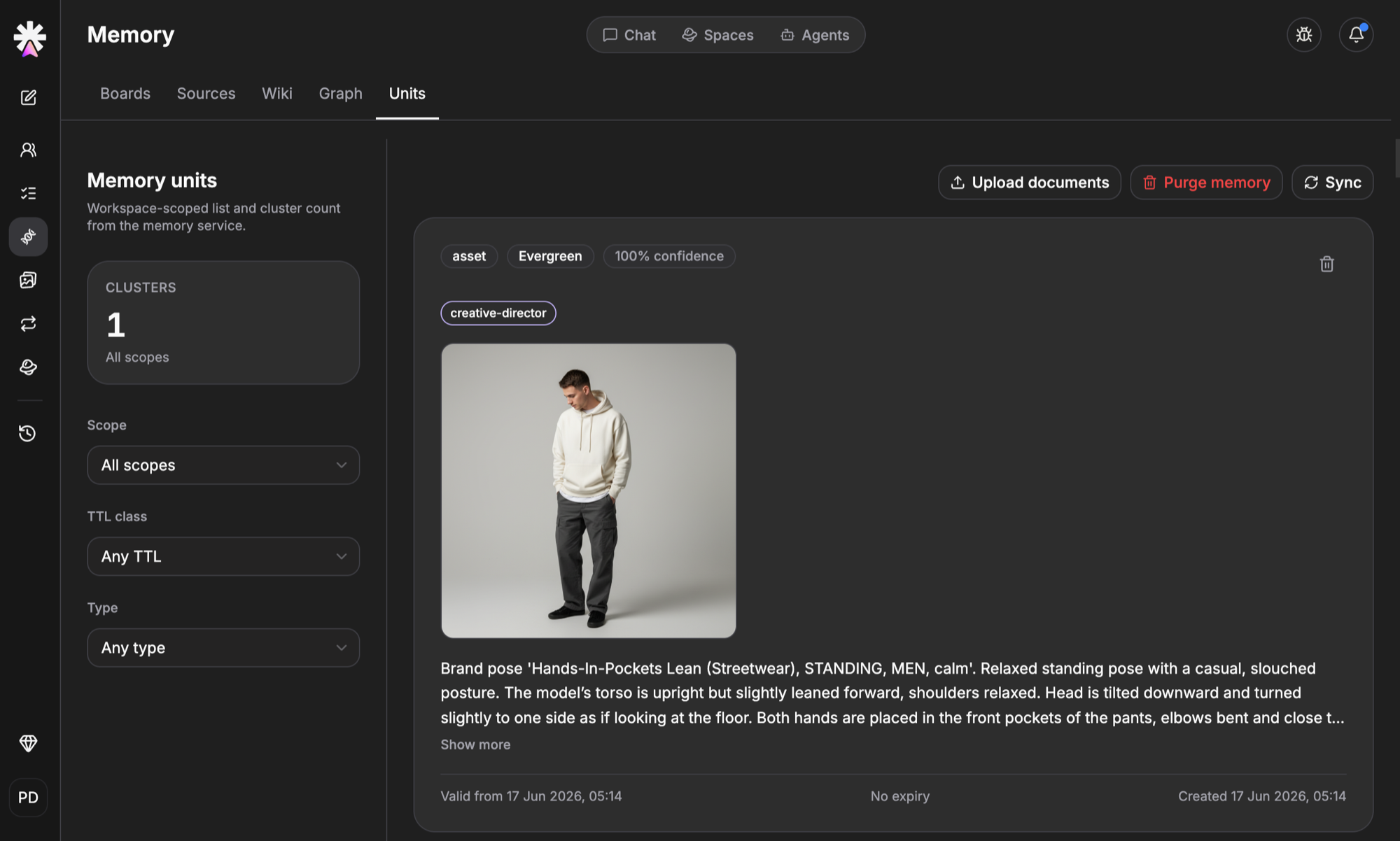
A living memory fed by every interaction. Approvals, edits, rejections, and performance all refine it, so it holds not just what is on-brand but what works for the business.
- An approval says an output worked
- An edit shows how the brand thinks
- A rejection says what to stop generating
Over time it reads less like a style guide and more like a record of what gets results, the knowledge an agent pulls before it acts.
Phase 04 · Live today
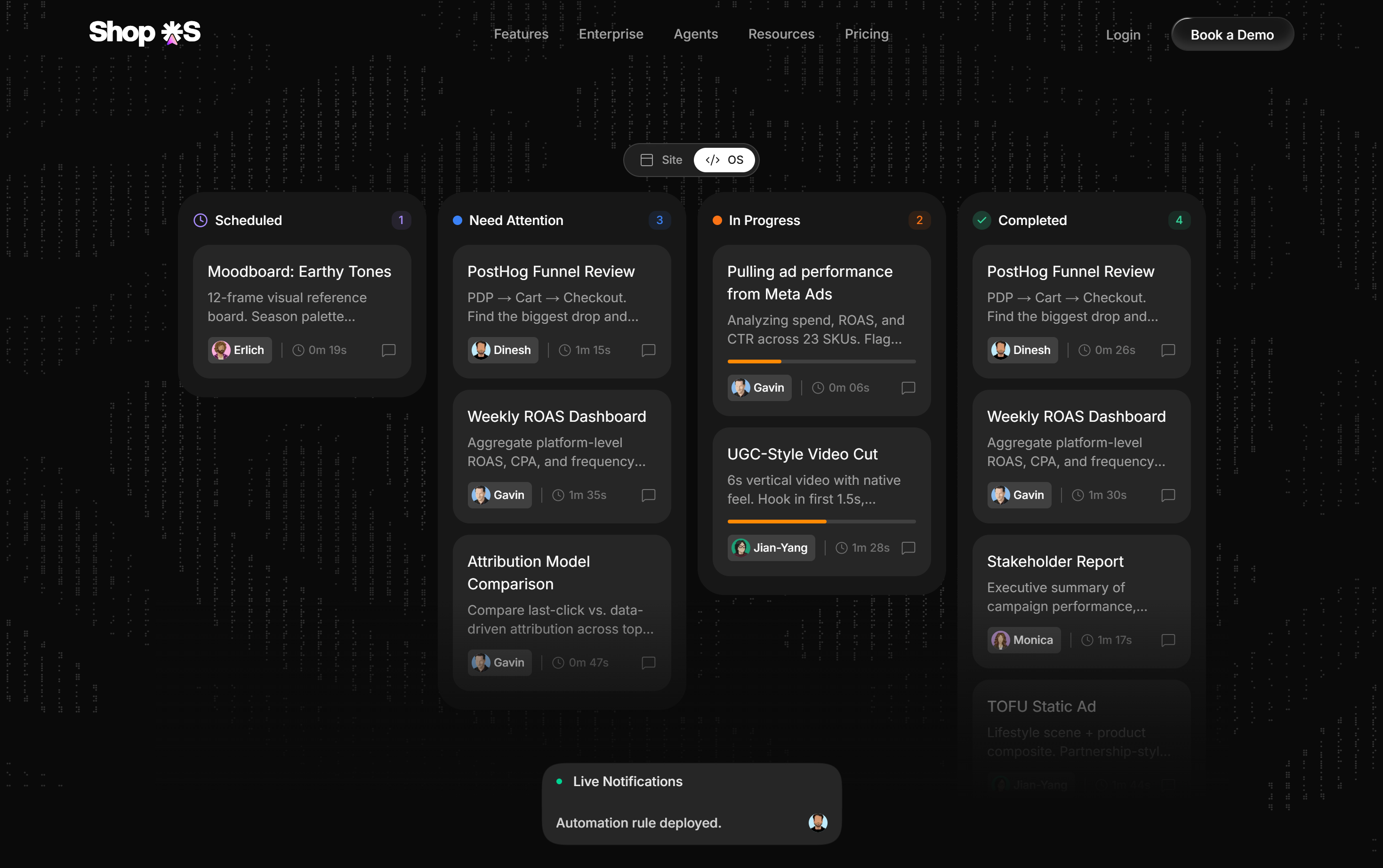
One shared memory for every agent.
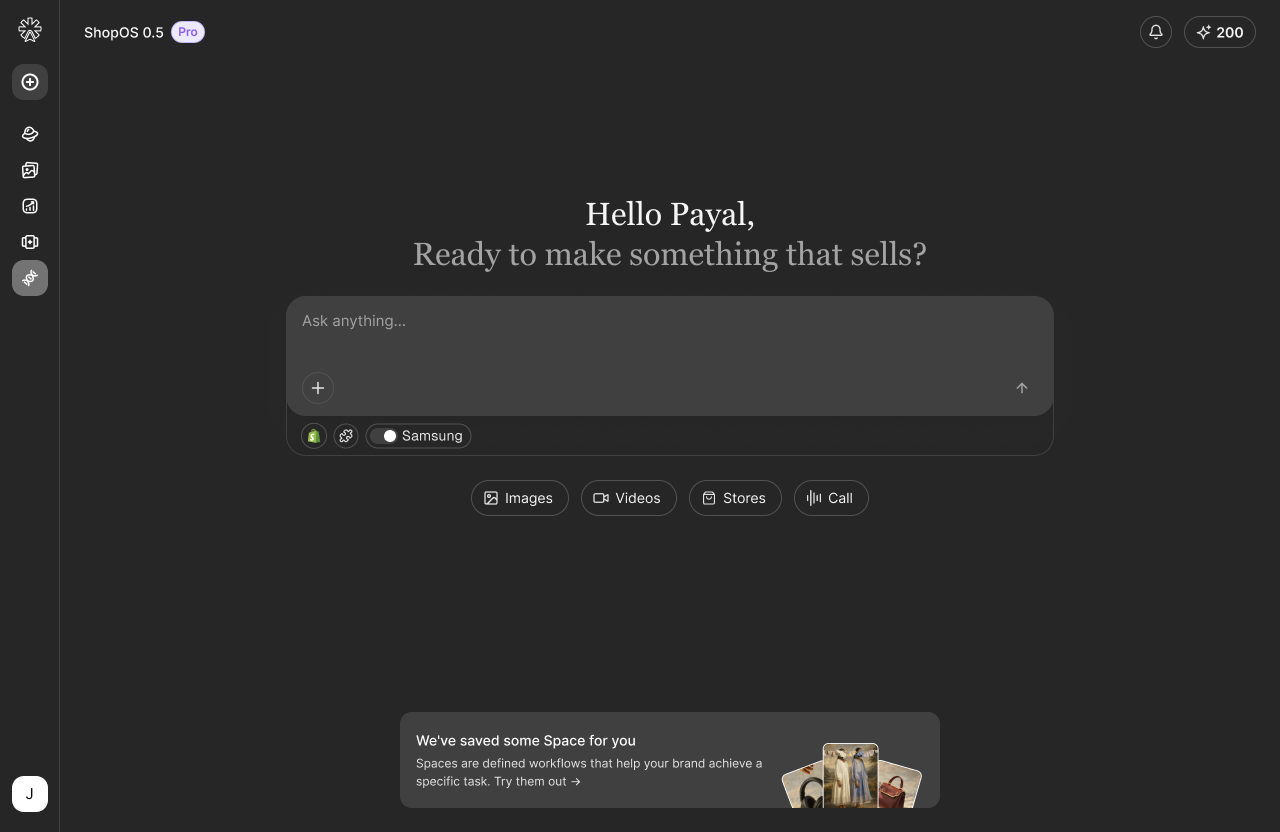
Then the ShopOS agents arrived, and memory became the thing they read first.
Rejected
Independent agents, each holding its own context, drifting apart and duplicating the same brand knowledge.
Chosen
Every agent reads from and writes back to one shared memory, a single source of truth for organizational intelligence.
- Design, copy, strategy, research, all reading from and writing back to one memory
- Less about guiding one generation, more about what works and what the business gets out of it

My role
I designed the system and built its front-end.
Calibrated, not inflated.
- Owned: the reframe (generation to memory), the information architecture of the memory, the memory-and-agent interaction models, the exploration UX, and the React front-end (designed and built it).
- Co-created: the phase roadmap and the feedback-loop model, with the product team.
- Guided: the backend memory engine and extraction pipeline, built by engineering.
The honest tradeoff
A memory only gets smart after enough decisions flow through it.
The living memory has a cold start. Early on, before enough approvals, edits, and rejections accumulate, it’s closer to the static profile I argued against, a memory that doesn’t remember much yet. I shipped it anyway because the loop compounds fast and a profile that never learns was worse. Given another pass, I’d design the empty and early states more deliberately, so a brand on day one feels the memory forming, not a promise it hasn’t earned.
Outcomes
Live, and onboarding real brands.
Honest about what is measured today.
- Brand DNA extraction from a URL, moodboards as child memory, the feedback loop, and one shared agent memory, in production today
A directional number (prompt-time and re-explanation reduction, brands onboarded) is still being instrumented; the shipped capability above is what is true today.
Where it’s going
Each brand memory is a node. Connect them.
Direction, not yet built, labeled honestly so the shipped work stands on its own.
- The shipped product is one brand’s memory
- The architecture points further: individual memories networked into a larger intelligence layer that surfaces patterns no single brand could see
- A continuously evolving memory for autonomous agents
The key question
The moat isn’t the model. It’s the memory.
Most AI products ask how to generate better outputs. I asked how to remember, and that question turned a generation tool into a foundation for organizational intelligence.
Want to see a brand move through it end to end? Say hello.