Dashboard
Enterprise Dashboard · ShopOS · Design + Front End · 2026
From a delivery window to the front door of the product
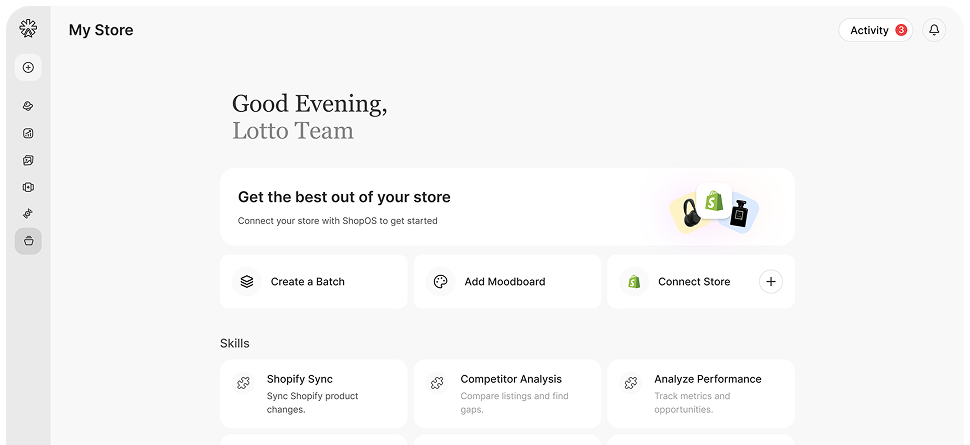
Enterprise brands used to receive bulk image batches through a standalone dashboard and run everything else over WhatsApp. I folded it into ShopOS, so the same dashboard became how they use the whole product.
TL;DR
- Challenge
- Enterprise brands ran 100 to 500-SKU batches, but they lived outside ShopOS: a standalone dashboard delivered the work, and briefing, feedback, and approval all happened over WhatsApp. They received batches; they never touched the rest of the product.
- Approach
- Stop treating it as a dashboard to redesign. Fold it into ShopOS, so brand context makes every batch better and the client comes inside the whole product.
- Solution
- In-product batch creation and review (input vs output, pinpoint annotations), per-SKU approval, Brand Memory at onboarding, and credits that open up Spaces and Cowork.
- Impact
- Batch close 14 days → 8 to 9. ~20 to 25 fewer SKU rejections per 100. 2 of 10 clients now work inside the product beyond their batches.
- My role
- Timeline
- Team
- Tools
Context
Enterprise brands used ShopOS without ever being inside it.
An enterprise brand wants a summer collection: 100 to 500 product images, each SKU on a generated background. They brief it to an account manager over WhatsApp, ShopOS generates the batch, and a standalone dashboard delivers it back.
The brand handed over a request and received images. Everything that mattered, briefing the work, judging it, asking for changes, approving it, happened in a chat thread, outside the product. The rest of ShopOS, the part that could actually make their work better, they never saw.
The friction
The review loop lived in a chat thread, and one reject killed the batch.
Three things made the work slow.
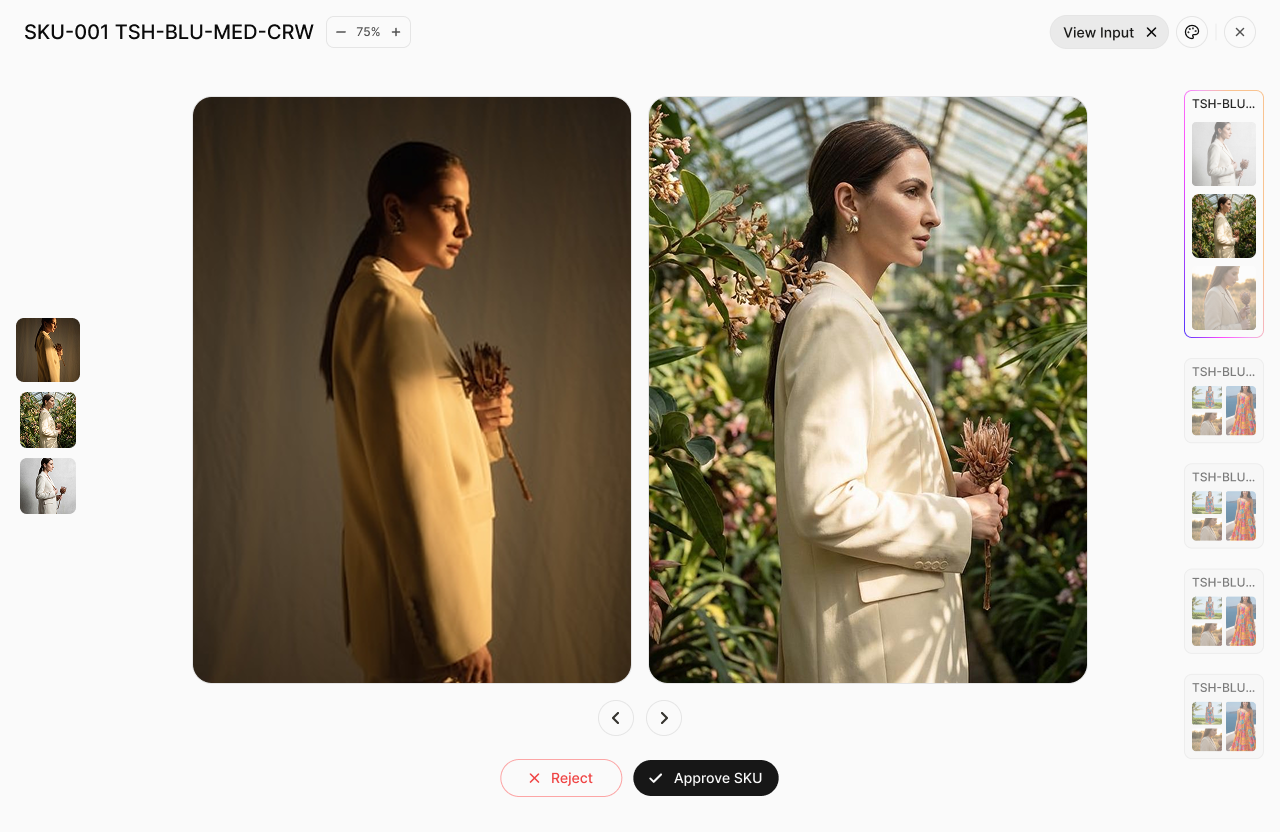
No input to compare against. You judged a generated image from memory of the garment, never side by side with it.
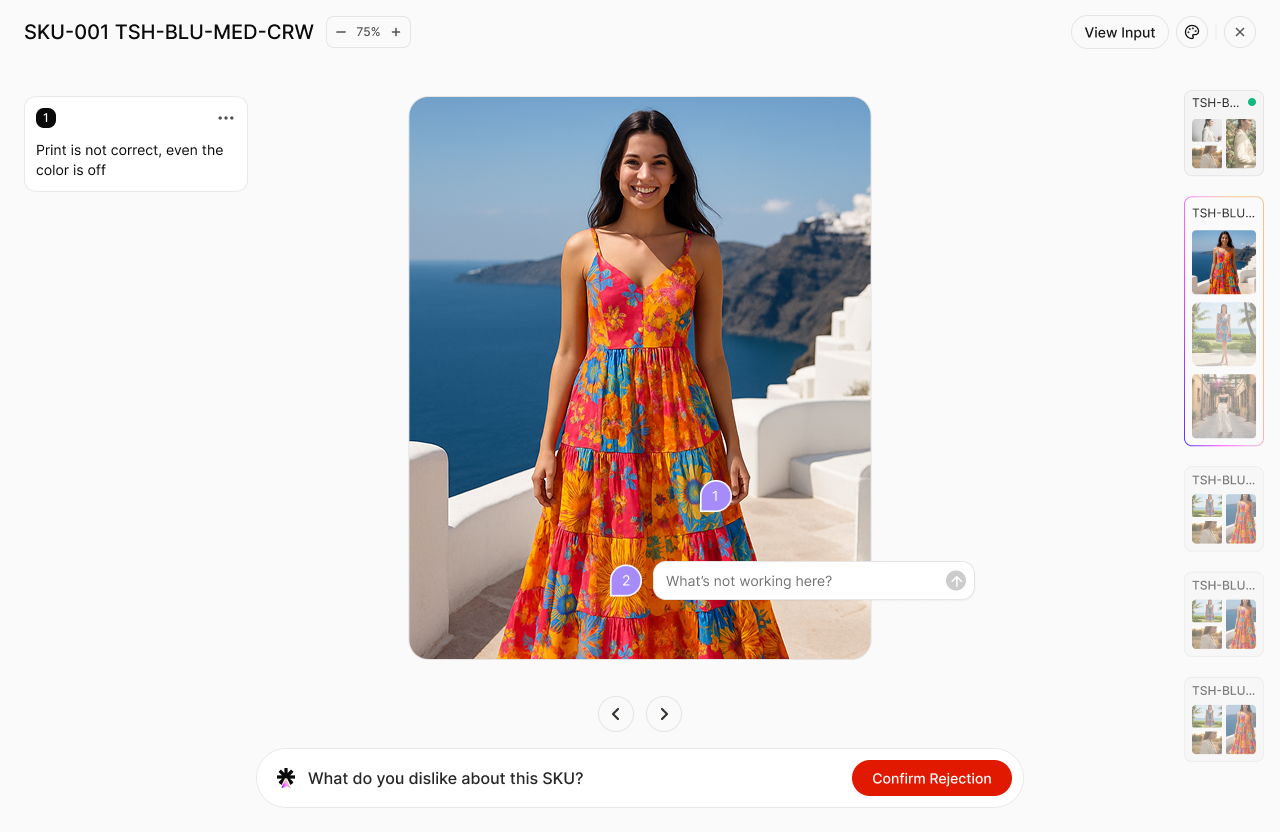
No feedback where the work lived. “The print is off” was a typed WhatsApp message with no image attached to it.
All-or-nothing approval. Reject one SKU and the entire batch went back to redo.
Out of 500 images you could love 499 and lose all of them over one. For batches that already took two weeks to close, that was the most expensive button in the product.
The reframe
The dashboard wasn’t broken. It was alone.
The easy read was “redesign the dashboard.” The more useful read: its biggest problem wasn’t on the screen at all.
The dashboard was an island. Standalone, it could only ever make review faster. It could never make the batch better, and it could never pull the brand toward the rest of the product, because it was cut off from both. So the move wasn’t to redesign the island. It was to connect it to the mainland: fold it into ShopOS.
The bet
Fold it in, and the whole product starts to compound.
Once the dashboard lives inside ShopOS, three things compound that a standalone tool structurally couldn’t:
- Better batches. The brand’s Brand Memory (voice, palette, rules, past decisions) is set up at onboarding and reads into every generation, so outputs come back on-brand from the first batch.
- More batches. Inside the product, the brand reaches past the single lifestyle style the old dashboard allowed into the full range of Spaces, many more batch types and variations.
- A reason to stay. Credits let them work beyond batches, edits, one-off generations, Cowork, so the dashboard stops being a delivery window and becomes the front door to the whole product.
The review fix was the visible part. The integration was the leverage.
The solution
The whole loop, now inside the product.
Walk it the way a brand does. Every step that used to live in a chat thread now lives on the work itself:
Create the batch in-product.
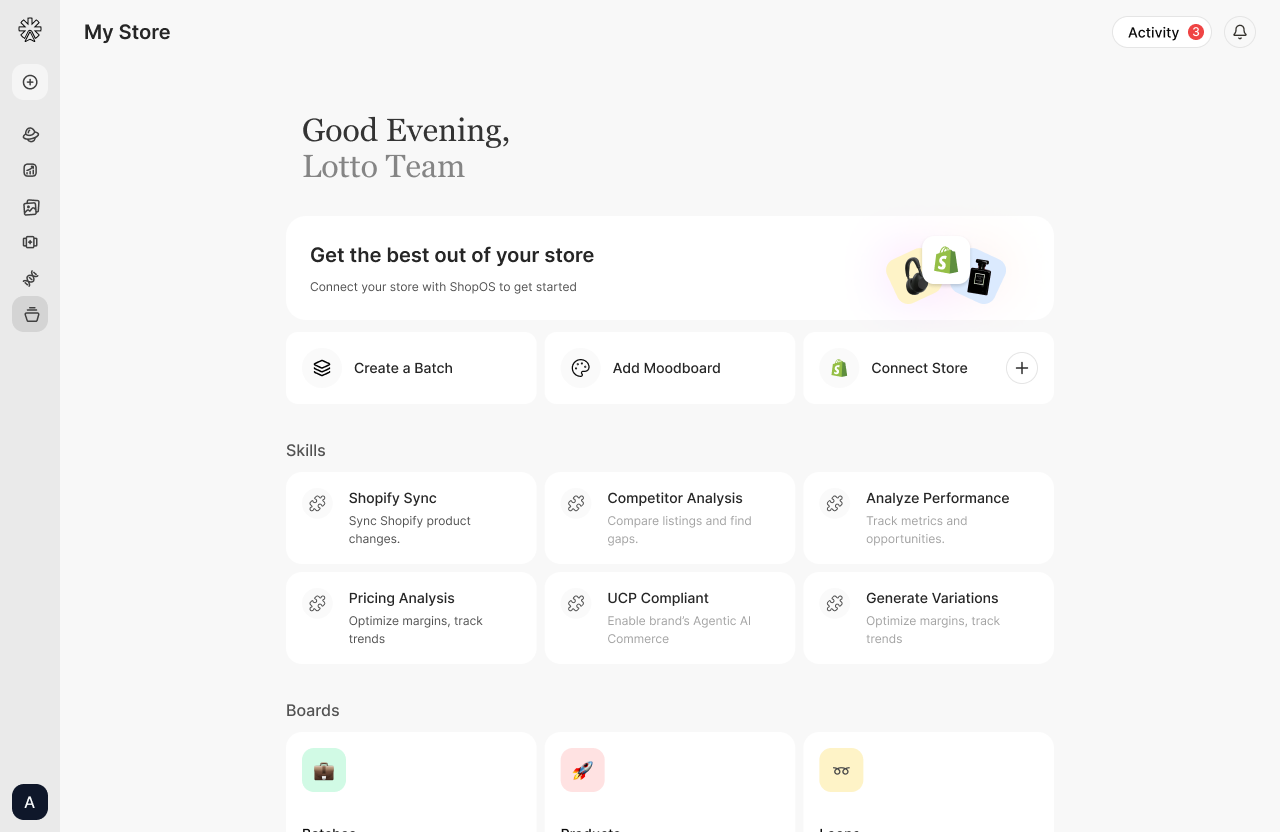
No WhatsApp brief. The brand sets up the batch inside ShopOS, against its Brand Memory and a moodboard.
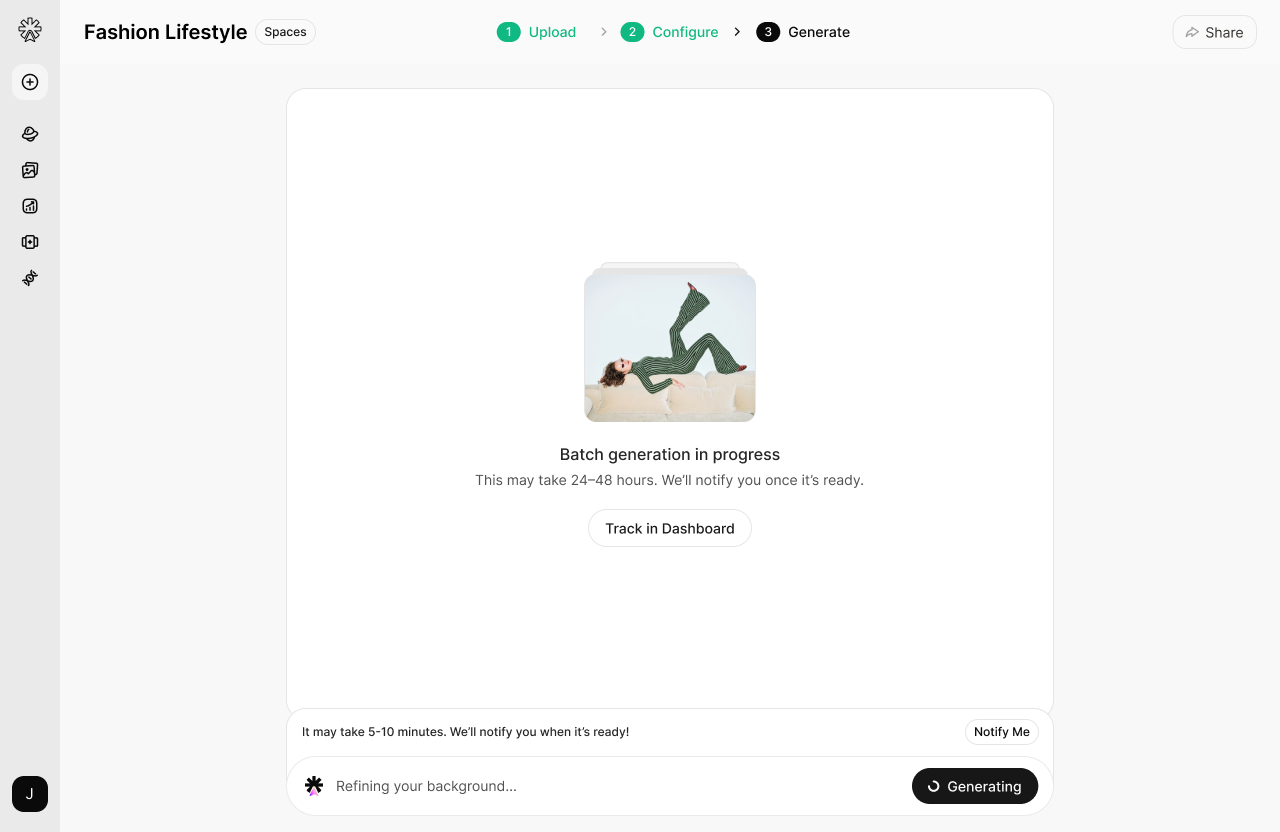
Review against the source.
Every generated image sits side by side with its input garment (View Input), so the brand judges the work against what it came from, not from memory.
(Fixes friction one.)
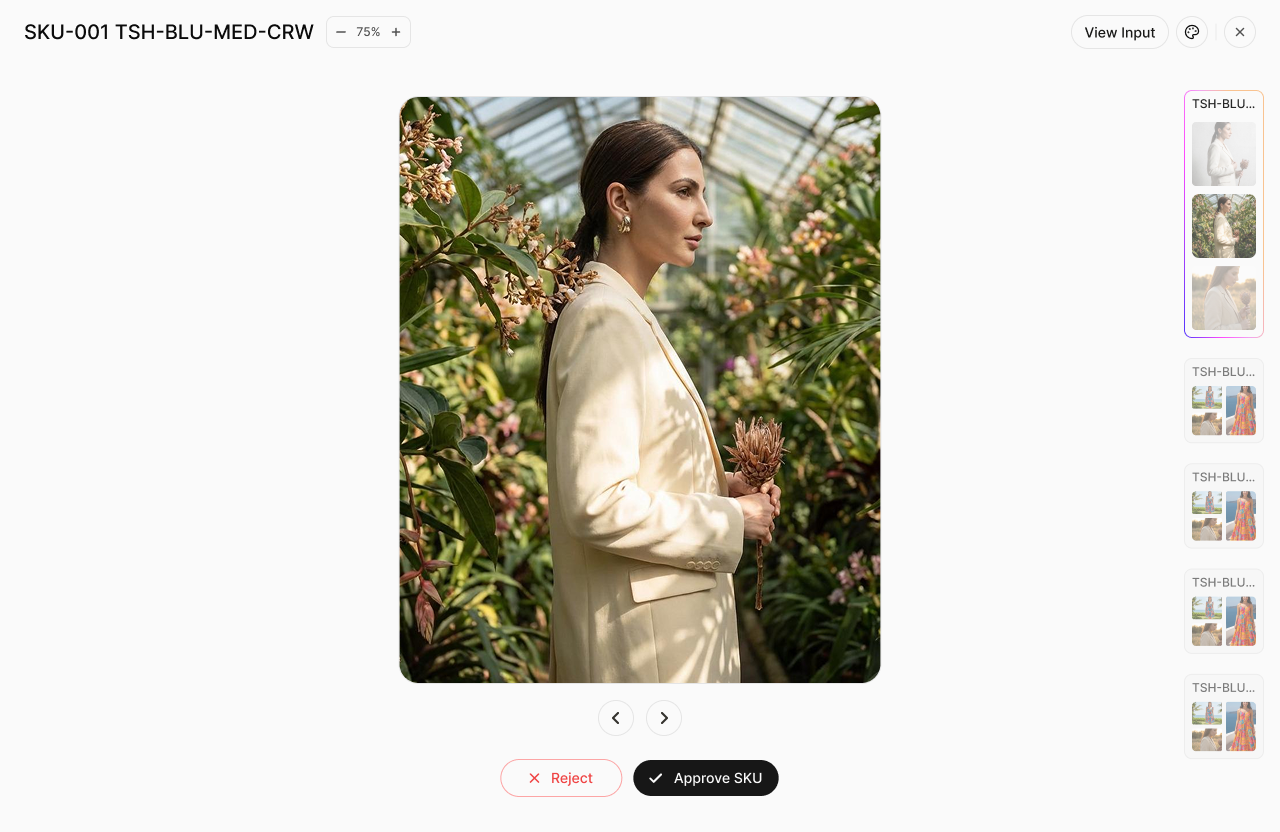
Mark exactly what’s wrong.
Drop numbered pins on the precise spot, “the print is off, here,” instead of typing a vague paragraph into chat. Structured, located feedback the production team can act on without a follow-up question.
(Fixes friction two.)
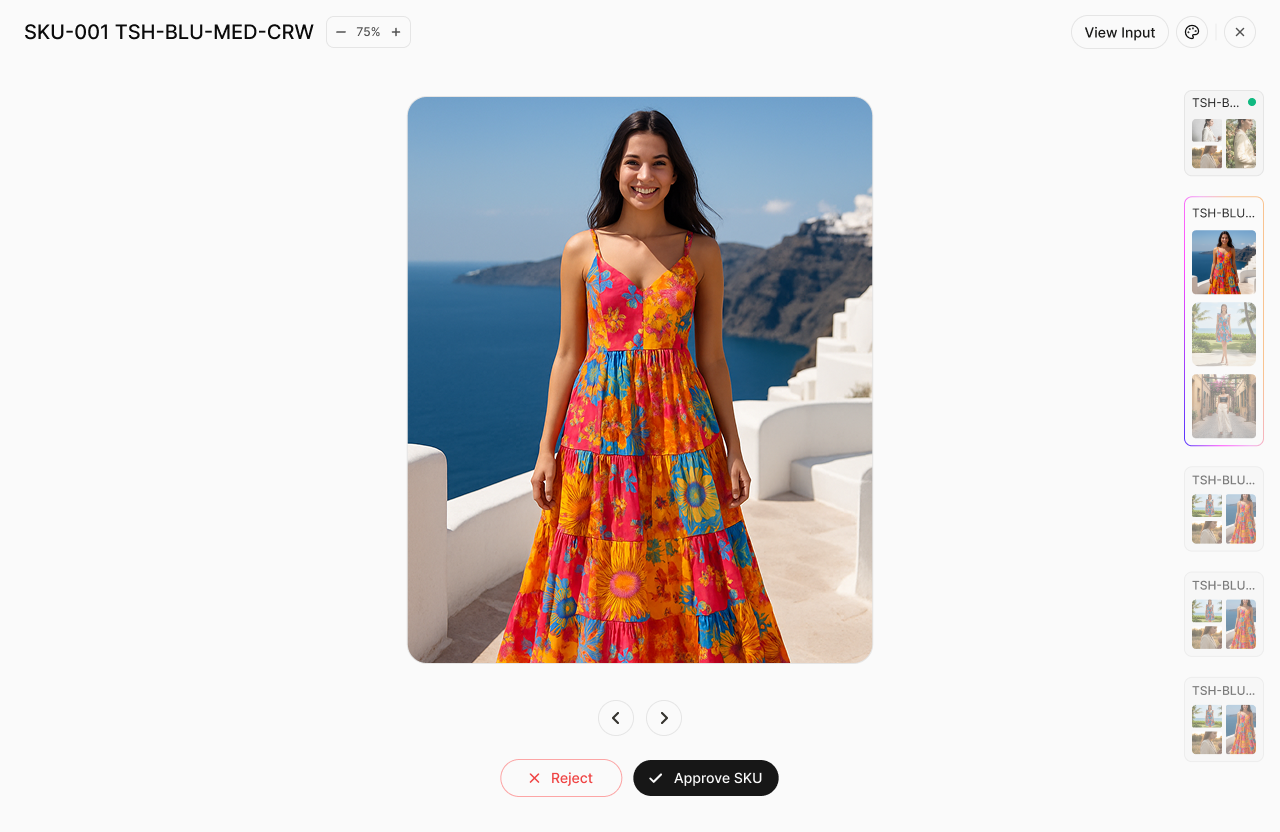
Approve per SKU, not all or nothing.
Keep and download the SKUs that work now; only the rejected ones go back to refine. One bad image costs one regeneration, not 499. Under the hood this reshaped the whole state model: every SKU carries its own status (ready / approved / rejected / refining), the batch becomes the sum of them, and a green/red rail makes that legible at a glance.
(Fixes friction three.)
Go further when ready.
The same brand can now spin up new batch types in Spaces or spend credits in Cowork, without leaving the product.
I designed and built the full surface in React, from the redesigned enterprise home to the per-SKU review screen, so it reads as one product, not a dashboard bolted on beside it.
The results
The loop got faster, the work got better, and brands started staying.
Estimated from structured debriefs with the account managers who own these clients, not from instrumented analytics. I went to the people closest to the work for the most honest read available.
- Batch close time: 14 days → 8 to 9 days. A batch that averaged two weeks to finalize now closes in a little over one. Less back-and-forth, faster decisions, outputs that needed less fixing.
- ~20 to 25 fewer SKU rejections per 100. Brand Memory set up at onboarding meant outputs came back on-brand from the first batch. Compounding Context, showing up as a lower reject rate.
- 2 of 10 enterprise clients now work inside the product beyond their batches, spending credits on edits and one-off generations. The clearest proof the bet landed: clients who used to only receive deliverables are now using ShopOS itself, a revenue motion the standalone dashboard could never have created.
What I’d do differently
Opening the door wasn’t the same as inviting people in.
I assumed that once enterprise clients were inside the product, they’d naturally explore the rest of it. Most didn’t. They came for batches and stayed on batches. The integration made the whole product reachable, but reachable isn’t the same as inviting, and I under-designed the nudges that would pull a brand from “my batch is done” into “let me try this in Spaces.” The door was open. I just hadn’t built enough reasons to walk through it.
The enterprise dashboard used to be a window the brand looked through. Now it’s the front door they walk in through, and because it opens onto the rest of ShopOS, every batch they run makes the next one easier.
Want to see how a batch moves through it end to end? Say hello.